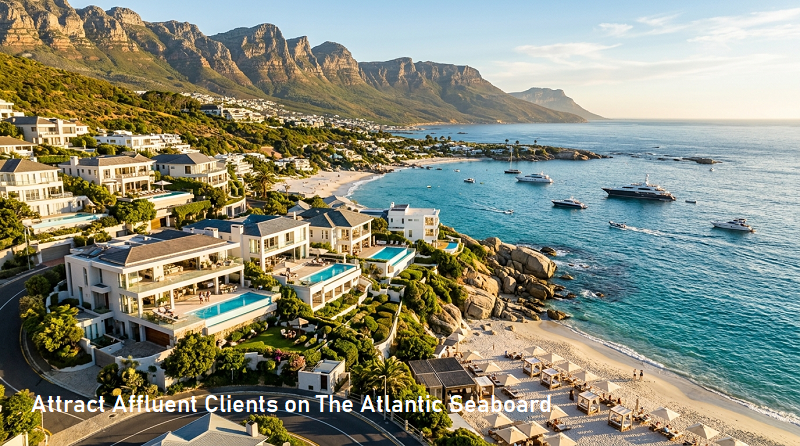
How To Attract Affluent Clients on The Atlantic Seaboard
Key Takeaways: Attracting Affluent Clients on The Atlantic Seaboard
- The Atlantic Seaboard is home to three distinct affluent client types — international tourists, digital nomads, and high-spending local residents — each requiring a different approach to attract and retain.
- Google Business Profile is your single highest-ROI marketing tool on the Atlantic Seaboard, where tourists and nomads search before they ever leave their accommodation.
- Neighbourhood identity matters more than broad Cape Town branding — Sea Point, Camps Bay, and Green Point each attract different affluent profiles with different expectations.
- The Sea Point Promenade draws thousands of daily visitors, making physical visibility and community presence as important as your digital footprint.
- Keep reading to find out which hyperlocal tactics are converting foot traffic into loyal, high-value clients right now on the Atlantic Seaboard.
The Atlantic Seaboard Is One of Africa’s Wealthiest Corridors
Few urban strips on the African continent concentrate wealth, lifestyle, and international attention the way Cape Town’s Atlantic Seaboard does. Stretching from Mouille Point through Green Point, Sea Point, Bantry Bay, Clifton, and into Camps Bay, this coastline has earned its reputation as Africa’s Côte d’Azur — framed by the Twelve Apostles mountain range on one side and the cold, electric-blue Atlantic on the other.
For businesses and service providers, that reputation translates into one of the most commercially valuable client pools in South Africa. CapeBiz Toolkit exists specifically to help Atlantic Seaboard businesses capitalise on this opportunity — and the strategies that actually work here are more precise than most business owners realise.
The Atlantic Seaboard is not a passive opportunity. It rewards businesses that understand the corridor’s micro-dynamics: which neighbourhoods attract which client types, when the money flows heaviest, and how affluent clients in this area actually discover and choose who they spend with.
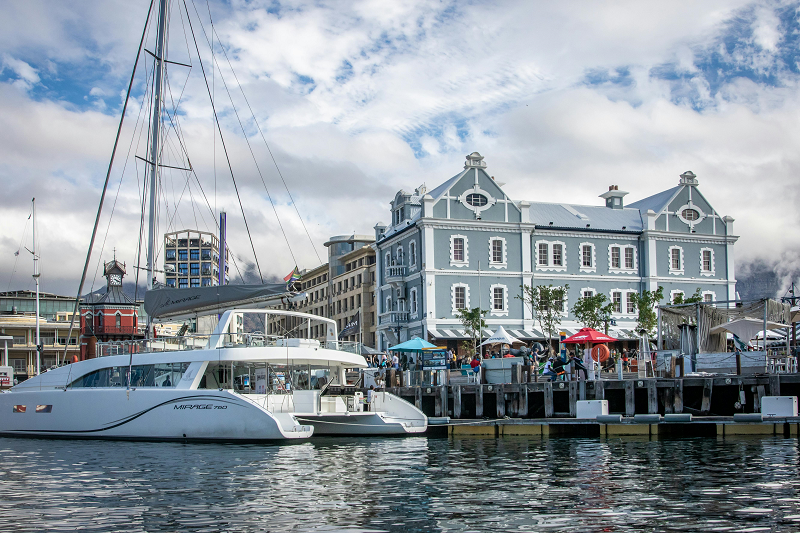
Who Are the Affluent Clients on the Atlantic Seaboard?
The Atlantic Seaboard’s high-value client base is not a single demographic — it’s three overlapping groups, each with distinct behaviours, discovery habits, and spending patterns. Knowing which group you’re targeting changes everything from your opening hours to your Instagram caption strategy.
International Tourists From Europe, the UK, the Middle East, and North America
International tourists — particularly from the UK, Germany, the Netherlands, the UAE, and the United States — represent the Atlantic Seaboard’s most concentrated burst of high spending. They arrive with strong currencies, limited time, and a strong preference for curated, high-quality experiences. They are not bargain-hunting. They are looking for the best version of Cape Town, and they rely almost entirely on Google Maps, TripAdvisor, and Instagram location tags to find it.
This group spends significantly on dining, accommodation, wellness, retail, and experiences — often making multiple purchases within the same neighbourhood on the same day. They are review-dependent and socially active, meaning a single exceptional experience can generate both a five-star review and organic social content that reaches thousands.
Digital Nomads Who Relocated After South Africa’s March 2025 Visa Launch
South Africa’s Digital Nomad Visa, launched in March 2025, created a new category of Atlantic Seaboard resident: internationally employed professionals working remotely in rand-priced environments. Sea Point and Green Point absorbed the largest share of this demographic, drawn by fast fibre connectivity, walkable café culture, and access to the promenade. These clients spend consistently rather than in seasonal bursts — they become regulars at the businesses that earn their trust early.
Long-Term Local Residents With High Spending Loyalty
The Atlantic Seaboard’s permanent resident base includes some of Cape Town’s wealthiest households. These are professionals, executives, and entrepreneurs who have chosen to live in one of South Africa’s most expensive property markets — and they spend locally, repeatedly, and with strong brand loyalty once a business earns their trust. They are less driven by online discovery and more influenced by word-of-mouth, physical visibility, and community reputation.
Get Found Online Before They Leave Home
The single most important shift in how affluent international tourists engage with local businesses is this: the decision is often made before they arrive. A tourist in London planning a Cape Town trip is already shortlisting restaurants, spas, and experiences on Google Maps weeks in advance. If your business is not optimised to appear in those searches, you are invisible to the most valuable client segment on the Atlantic Seaboard.
Why Google Business Profile Is Your Highest-ROI Move
A fully optimised Google Business Profile is the most cost-effective marketing tool available to any Atlantic Seaboard business. When a tourist, digital nomad, or local resident opens Google Maps and searches for a café, restaurant, boutique, or service provider in Sea Point or Camps Bay, the results they see — and the order in which they appear — are determined by how well each business has built and maintained its profile. This means accurate categories, updated hours, high-quality photos, and a consistent stream of recent reviews are not optional extras. They are your primary storefront for the tourist segment.
How TripAdvisor and Instagram Location Tags Drive Tourist Discovery
TripAdvisor remains the dominant pre-trip research platform for European and UK tourists specifically. A business ranked in the top ten for its category in the Sea Point or Camps Bay area receives disproportionate visibility compared to its competitors. Instagram location tags work differently — they function as social proof during the trip rather than before it, with tourists searching location hashtags like #CampsBay or #SeaPoint while already in the area to decide where to go next.
The practical implication is that your TripAdvisor and Instagram presence serve different moments in the customer journey and should be managed with different objectives. TripAdvisor content should prioritise credibility and volume of reviews. Instagram should prioritise visual quality, location tagging, and content that makes a first-time visitor feel like visiting is an obvious decision.
Local SEO Tactics That Pull Atlantic Seaboard Search Traffic
Local SEO for Atlantic Seaboard businesses is not about competing nationally — it is about dominating a very specific set of neighbourhood-level search terms. Phrases like “best restaurant Sea Point,” “coffee shop Camps Bay,” or “hair salon Green Point” are the searches that convert into actual foot traffic. Embedding these terms naturally into your Google Business Profile description, your website meta titles, and your on-page content is the foundation.
Beyond keywords, local citation consistency matters. Your business name, address, and phone number must be identical across Google, TripAdvisor, Facebook, and any local directories. A mismatch in even a single field signals inconsistency to Google’s local ranking algorithm. For Atlantic Seaboard businesses specifically, the high proportion of tourists and digital nomads in the customer base amplifies the importance of this — both groups are significantly more likely to search before they visit than traditional walk-in customers.
What Affluent Clients on the Atlantic Seaboard Actually Want
Affluent clients — whether they are international tourists, digital nomads, or long-term local residents — are not primarily motivated by price. They are motivated by confidence. They want to feel certain, before they walk through your door, that the experience will match their expectations. Everything you do in your marketing, your physical presentation, and your online presence should be designed to build that confidence quickly and convincingly.
What separates businesses that consistently attract this demographic from those that struggle is a clear understanding of what high-value clients on the Atlantic Seaboard are actually responding to. It is rarely what business owners assume.
- Frictionless quality signals — High-resolution photos, a clean and current website, and prompt responses to reviews all communicate professionalism before a single rand is spent.
- Social proof from people like them — A German tourist trusts a recent review from another European visitor far more than a generic five-star rating. Review diversity and recency both matter.
- A specific point of view — Affluent clients are pattern-matching against dozens of options. Businesses with a clear identity — a distinct aesthetic, a signature product, a compelling story — are far more memorable than generic offerings.
- Effortless discovery — If finding, booking, or contacting your business requires effort, you have already lost a segment of this audience. Booking links, WhatsApp contact options, and real-time availability signals remove friction.
- Neighbourhood belonging — Especially for local residents and digital nomads, the feeling that a business is genuinely part of the community — not just operating in it — creates a loyalty that price-based competitors cannot replicate.
The businesses that miss this audience almost always make the same mistake: they market features instead of confidence. Listing your qualifications, your square footage, or your years in operation tells an affluent client very little. Showing them a packed terrace on a Tuesday afternoon, a wall of recent five-star reviews, and a clear visual identity tells them everything they need to know.
Authenticity Over Generic Luxury
The Atlantic Seaboard’s most successful businesses understand that “luxury” as a marketing message has been diluted to the point of meaninglessness. Affluent clients who travel frequently or live in premium environments are highly attuned to the difference between genuine quality and performed opulence. Authentic character — a chef with a real story, a boutique with a curated point of view, a wellness studio with a specific philosophy — consistently outperforms generic luxury signalling. Lead with what makes your business genuinely distinct, and the right clients will self-select.
Neighbourhood Identity Beats Broad Cape Town Branding
Positioning your business as a “Cape Town” experience is too broad to resonate with the Atlantic Seaboard’s affluent client base. These are people who have chosen to be in Sea Point, in Camps Bay, in Green Point — specifically. They respond to businesses that reflect the identity of their immediate neighbourhood. A Camps Bay restaurant that leans into the sundowner culture, the mountain backdrop, and the unhurried summer evening is speaking directly to its audience. The same restaurant describing itself as offering “Cape Town’s finest dining” is speaking to no one in particular.
Seasonal Strategy for the Atlantic Seaboard
The Atlantic Seaboard runs on a pronounced seasonal rhythm. The November to March summer peak brings the highest concentration of international tourists, the strongest foot traffic on the promenade, and the most competitive environment for customer attention. The April to October period is quieter in tourist volume but far from commercially dead — particularly for businesses that have built strong digital nomad and local resident relationships.
The businesses that thrive year-round are those that treat the two seasons as distinct campaigns rather than a single marketing push that they simply reduce in winter. Summer is an acquisition season. Winter is a retention and loyalty-building season. Each requires a different strategy, a different message, and a different channel emphasis.
How to Maximise the November to March Summer Peak
During peak season, international tourist volume means your Google Business Profile, TripAdvisor ranking, and Instagram presence carry maximum weight. This is the period to aggressively solicit reviews from satisfied customers — a surge in recent, high-quality reviews during November and December compounds into stronger visibility throughout the season. It is also the period to activate any partnerships with accommodation providers, concierges at boutique hotels, and short-term rental hosts in Clifton and Camps Bay, who are regularly asked by guests for local recommendations and wield disproportionate influence over where affluent tourists spend.
What Works During the Quieter Winter Months
Winter on the Atlantic Seaboard is not a write-off — it is a recalibration. The tourist volume drops, but the digital nomad and local resident segments remain active and are, in many ways, more accessible during this period because they are less competed for. Winter is the season to deepen relationships: loyalty programmes, members-only events, exclusive previews, and community-facing activations all perform strongly when the summer crowd has thinned.
Green Point and Sea Point specifically maintain strong year-round foot traffic from residents, particularly along Main Road and the promenade, which draws joggers, dog walkers, and families regardless of season. Businesses positioned along these routes with consistent physical visibility — updated window displays, pavement signage, and active community social media presence — maintain relevance even when tourist numbers are low.
Winter is also the highest-leverage period for content creation. Quieter operations allow for professional photography, updated Google Business Profile content, and the kind of considered storytelling on Instagram and local blogs that builds the organic search authority that pays dividends when summer traffic returns.
Neighbourhood-by-Neighbourhood Breakdown
The Atlantic Seaboard is not a single market — it is a sequence of micro-markets, each with its own dominant client type, spending pattern, and discovery behaviour. A strategy calibrated for Camps Bay will underperform in Sea Point, and vice versa. Understanding the nuances of each neighbourhood is the difference between a marketing budget that works and one that disappears into broad, unfocused activity.
Sea Point: Digital Nomads, Promenade Regulars, and Review-Driven Discovery
Sea Point is the Atlantic Seaboard’s strongest all-round performer for retail and hospitality. It has the highest residential density on the strip, the most consistent year-round foot traffic via the promenade and Main Road, and the most diverse mix of client types — long-term residents, digital nomads, domestic tourists, and international visitors all overlap here in a way that does not happen as cleanly anywhere else on the corridor.
For businesses in Sea Point, the strategic priority is review volume and recency. This neighbourhood’s client base is more digitally active and more review-literate than any other segment on the Atlantic Seaboard. A Sea Point café or service provider with 200 recent reviews and a 4.7-star rating is almost unassailable to a competitor with 40 reviews and a 4.9 — because the volume signals consistent, reliable quality rather than a handful of exceptional experiences. Build your review pipeline systematically, and Sea Point’s organic discovery engine will do the heavy lifting.
Camps Bay: High-End Tourists and Short-Term Rental Guests
Camps Bay operates on a different frequency to the rest of the Atlantic Seaboard. The beachfront strip — lined with restaurants, bars, and boutiques facing directly onto one of Cape Town’s most photographed beaches — attracts a higher concentration of international tourists and short-term rental guests than any other neighbourhood on the corridor. Clifton and Camps Bay together host a significant volume of luxury villa and apartment rentals, and the guests staying in those properties tend to have both the budget and the appetite for premium local experiences. The key to reaching them is not always digital — it is often the concierge recommendation, the printed card at the villa, or the partnership with a short-term rental management company that puts your business name in front of a guest before they have even unpacked.
Camps Bay’s spending profile skews heavily toward dining, sundowner experiences, and beach-adjacent wellness. Businesses that lean into the neighbourhood’s visual identity — the mountain backdrop, the golden hour light, the unhurried summer evening atmosphere — generate significantly more organic social content from satisfied customers. That user-generated content functions as perpetual, zero-cost marketing that reaches new international audiences every time a guest posts a tagged photo from your premises.
Green Point and Mouille Point: Young Professionals and Event-Driven Foot Traffic
Green Point and Mouille Point serve a different client profile — predominantly young professionals, design-conscious residents, and event-driven visitors drawn by the Cape Town Stadium precinct, the Metropolitan Golf Course, and the Green Point Urban Park. This is not the tourist-heavy environment of Camps Bay, nor the high-density promenade culture of Sea Point. It is a neighbourhood of deliberate choices, where clients tend to research more, spend selectively, and reward consistency with strong loyalty.
The Green Point Main Road corridor has evolved into a genuine dining and lifestyle destination in its own right, with an increasing number of design studios, specialty food retailers, and wellness businesses drawing a clientele that values quality over convenience. For businesses positioned here, the strategic opportunity lies in becoming a neighbourhood institution — the kind of place that a Green Point resident recommends without prompting because it has become part of their weekly routine.
Event-driven foot traffic from the stadium precinct represents a secondary but significant opportunity. Major concerts, sporting events, and conventions at the Cape Town International Convention Centre push thousands of high-income visitors through Green Point and Mouille Point on specific dates. Businesses that plan around the events calendar — with targeted promotions, extended hours, and visible street presence on event days — consistently outperform those that treat the foot traffic as random rather than predictable.
- Monitor the Cape Town Stadium events calendar at least 60 days in advance and plan operational and marketing activity around confirmed dates.
- Position your Google Business Profile hours accurately on event days — tourists searching for nearby options immediately after an event rely on real-time accuracy.
- Activate pavement presence on event days — an A-board with a clear, relevant message at the right moment converts passing foot traffic that would otherwise walk straight past.
- Build relationships with Green Point accommodation providers — the cluster of boutique hotels and guesthouses in the area regularly field guest questions about where to eat and what to do within walking distance.
The combination of a stable, high-income resident base and predictable event-driven spikes makes Green Point and Mouille Point one of the Atlantic Seaboard’s most commercially reliable neighbourhoods for businesses that approach it with a dual-track strategy: build deep loyalty with locals, and capitalise on event traffic with precision timing.
Turn Walk-Past Traffic Into Walk-In Customers
The Atlantic Seaboard’s natural foot traffic is a genuine competitive advantage — but it is not automatic revenue. Thousands of people walking the Sea Point Promenade, strolling the Camps Bay beachfront, or moving along Green Point Main Road every day represent potential customers who are already in the right physical location. The gap between walk-past and walk-in is almost always closed by the same set of factors: visual clarity, an obvious reason to stop, and a frictionless first step. A well-positioned A-board with a single compelling message, a window display that communicates identity in under three seconds, and a visible QR code linking to your menu, booking page, or WhatsApp contact can convert ambient foot traffic into paying customers at a meaningful rate. This is not a secondary strategy — on the Atlantic Seaboard, where promenade and beachfront exposure is built into the geography, physical presence is a primary acquisition channel.
Community events are the other underutilised lever. Pop-up activations, neighbourhood markets, and co-hosted experiences with adjacent businesses generate the kind of warm introductions that digital advertising rarely replicates. The Atlantic Seaboard’s community — particularly the digital nomad and expat segments — is genuinely event-hungry and actively looking for local experiences worth attending. A business that creates or participates in those experiences positions itself inside the social fabric of the neighbourhood in a way that a boosted Instagram post simply cannot.
FAQ’s On Attracting Affluent Clients on The Atlantic Seaboard
These are the questions Atlantic Seaboard business owners and service providers ask most frequently when developing a strategy to attract and retain high-value clients. The answers are grounded in how this specific market actually behaves — not generic small business advice. For more insights, you can explore Pam Golding Properties for expert perspectives on the Atlantic Seaboard.
Quick Reference: Atlantic Seaboard Client Acquisition at a Glance
Client Type Primary Discovery Channel Key Conversion Factor Best Neighbourhood International Tourist Google Maps, TripAdvisor Review volume & recency Camps Bay, Sea Point Digital Nomad Instagram, word of mouth WiFi, vibe, consistency Sea Point, Green Point Local Resident Word of mouth, physical visibility Community trust & loyalty Sea Point, Mouille Point Short-Term Rental Guest Concierge recommendation Proximity & premium quality Camps Bay, Clifton
Understanding which client type you are primarily targeting — and aligning your marketing channels, messaging, and operational decisions to that profile — is the single most clarifying exercise any Atlantic Seaboard business can do. Most businesses that struggle to attract affluent clients are not failing at execution. They are failing at targeting precision.
The table above is a starting framework, not a rigid prescription. Many Atlantic Seaboard businesses serve two or three of these client types simultaneously — and the strongest operations have a clear primary strategy for each, rather than a blended approach that dilutes impact across all of them.
What Type of Business Does Best on the Atlantic Seaboard?
Businesses that perform consistently well on the Atlantic Seaboard share one characteristic more than any other: they have a clear identity that resonates with a specific client type. Restaurants with a defined cuisine and aesthetic, wellness studios with a particular philosophy, boutiques with a curated point of view, and service providers with a specialist reputation all outperform generalist competitors. The corridor’s affluent client base is pattern-matching against a high volume of options — specificity cuts through where breadth disappears. Practically, this means hospitality, experiential retail, premium wellness, and professional services with a lifestyle angle are the strongest-performing categories, particularly in Sea Point, Camps Bay, and Green Point.
How Important Are Online Reviews for Attracting Affluent Clients in This Area?
Online reviews are not a nice-to-have on the Atlantic Seaboard — they are a primary acquisition mechanism for the tourist and digital nomad segments. Affluent international visitors make decisions based on review quality, volume, and recency in a way that no amount of paid advertising can fully offset. A business with 300 reviews averaging 4.6 stars will consistently outperform a business with 30 reviews averaging 4.9 stars in actual booking and walk-in conversion, because volume signals reliability. Build a systematic process for requesting reviews from satisfied customers — a simple WhatsApp message with a direct Google review link sent within 24 hours of a positive interaction is the highest-converting method currently working on the Atlantic Seaboard.
Is the Atlantic Seaboard Too Seasonal to Build a Sustainable Business?
Seasonality is a genuine factor, but it is not a fatal one. The businesses that struggle with seasonality are those that rely entirely on summer tourist volume without building year-round client relationships with digital nomads and local residents. The Atlantic Seaboard’s permanent population is large, high-income, and deeply loyal to businesses that earn their trust. A café, service provider, or retailer that treats the winter months as a community-building and loyalty investment — rather than a revenue gap to survive — consistently emerges into summer with a stronger foundation and a more resilient revenue base than the previous year.
How Do I Compete With Established Businesses That Already Have Strong Local Loyalty?
Established local loyalty is built over time, but it is not impenetrable. The most effective entry strategy on the Atlantic Seaboard is not to compete directly with an institution — it is to identify the specific client type or need that the established competitor does not serve as well, and own that position clearly. A new Sea Point café that positions itself as the neighbourhood’s best remote-work environment, with dedicated power points, fast WiFi, and all-day breakfast, does not need to out-compete an established brunch spot. It needs to be the obvious choice for the digital nomad segment that the brunch spot was never designed to serve. Specificity is always more powerful than a broad head-to-head challenge.
Do I Need a Big Marketing Budget to Attract International Tourists on the Atlantic Seaboard?
A large marketing budget accelerates results but is not a prerequisite. The Atlantic Seaboard’s highest-ROI marketing channels — Google Business Profile optimisation, TripAdvisor review building, and Instagram location tagging — are either free or very low cost. The investment required is time and consistency, not financial scale. A business that commits to systematically requesting reviews, posting high-quality location-tagged content three times per week, and maintaining an accurate and complete Google Business Profile will outperform a competitor spending significantly on paid advertising but neglecting these foundations.
Where budget does make a meaningful difference is in professional photography. The Atlantic Seaboard’s affluent client base makes rapid visual judgements — a set of high-quality images across your Google Business Profile, TripAdvisor listing, and Instagram account pays dividends that compound over time. This is the single highest-leverage paid investment for most Atlantic Seaboard businesses at the early stage of building their digital presence.
The full marketing stack for an Atlantic Seaboard business attracting international tourists and digital nomads does not need to be complicated. A focused approach to the following priorities, executed consistently, outperforms scattered activity at higher budget levels:
- Google Business Profile: Complete, accurate, and updated with fresh photos and posts monthly.
- TripAdvisor: Actively managed with responses to every review, positive or negative.
- Instagram: Location-tagged posts three times per week with high-quality visuals and neighbourhood-specific hashtags.
- Review pipeline: A systematic process for requesting reviews from satisfied customers within 24 hours of a positive interaction.
- Concierge relationships: Personal introductions to accommodation providers, short-term rental managers, and hotel concierges in your immediate neighbourhood.
- Physical presence: Clean, current, and compelling pavement and window presentation on all high-traffic days.
None of these require significant financial outlay. All of them require consistency, attention to detail, and an understanding of how the Atlantic Seaboard’s affluent client base actually makes decisions — which is precisely what separates the businesses that thrive on this corridor from those that merely survive it.
The Atlantic Seaboard rewards businesses that show up with clarity, specificity, and consistency — not those with the biggest budgets or the broadest reach. Understand your client type, own your neighbourhood identity, and build every touchpoint to signal confidence before a single rand changes hands.