
How To Boost Foot Traffic on The Atlantic Seaboard
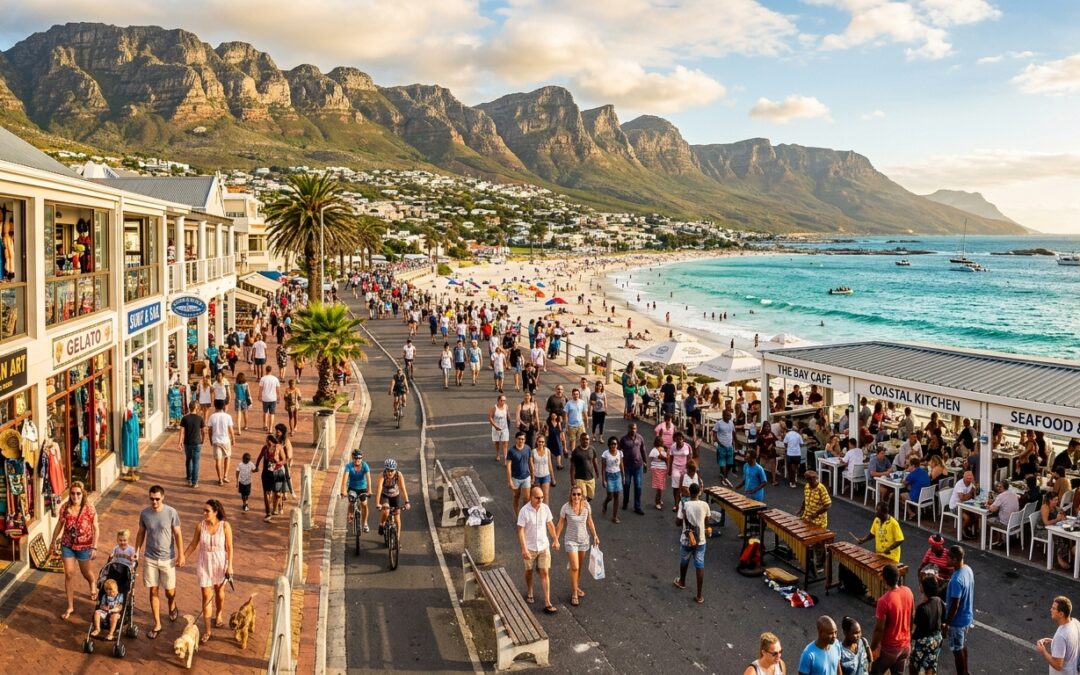
Increasing foot traffic along the Atlantic Seaboard hinges on harnessing its scenic density by strengthening pedestrian connectivity, elevating retail into immersive experiences, and maximizing the promenade’s appeal. This can be achieved through walkability upgrades, dynamic events, and interactive, shareable attractions that seamlessly convert casual visitors into engaged customers.
Key Takeaways: Boost Foot Traffic on The Atlantic Seaboard
- The Atlantic Seaboard is one of Cape Town’s highest foot-traffic corridors — but only businesses that actively position themselves in front of the right audiences convert that pedestrian flow into paying customers.
- Three distinct customer types drive Atlantic Seaboard spending: international tourists, digital nomads (surging since South Africa’s Digital Nomad Visa launched in March 2025), and local residents who use the promenade daily.
- Google Business Profile optimisation is the single highest-ROI digital move for any Cape Town walk-in business — most customers search before they step outside.
- Seasonal strategy matters more here than almost anywhere else in South Africa — the November to March summer peak and the quieter winter months require completely different approaches.
- Keep reading to discover which specific promenade tactics, local partnerships, and hyperlocal social media moves are pulling real foot traffic for Atlantic Seaboard businesses right now.
The Atlantic Seaboard is already doing half the work for you — the question is whether your business is set up to catch the flood of people walking past every single day.
Cape Town’s Atlantic Seaboard, stretching from Mouille Point through Green Point, Sea Point, Bantry Bay, Clifton and into Camps Bay, is one of the most naturally foot-traffic-rich urban corridors in South Africa. The Sea Point Promenade alone draws thousands of walkers, joggers, families and tourists daily. Cape Town Data tracks neighbourhood-level movement and lifestyle trends across these suburbs, and the data consistently shows that the Atlantic Seaboard has some of the lowest retail vacancy rates and highest pedestrian density in the city — with rental vacancy sitting at roughly 1% citywide.
But to boost traffic on the Atlantic Seaboard doesn’t automatically mean high foot traffic into your business. The businesses winning in this area right now are the ones that understand exactly who is walking past, what those people are looking for, and how to intercept them — both online before they leave home and physically once they’re on the street.
The Atlantic Seaboard Foot Traffic Opportunity
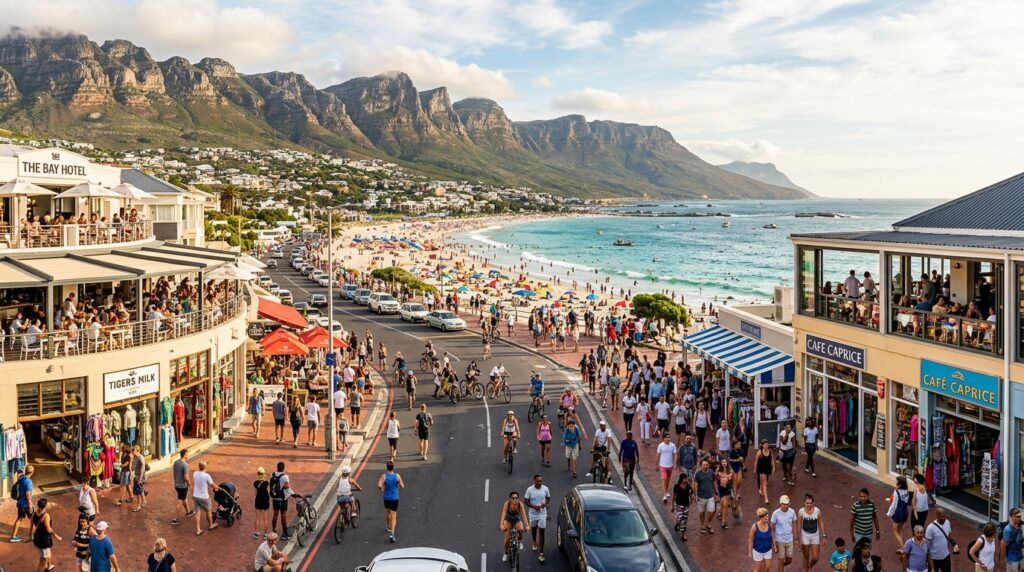
Few urban strips in South Africa combine natural beauty, dense residential living, international tourism, and a growing digital nomad community the way the Atlantic Seaboard does. Sea Point’s Main Road is lined with cafés, delis, restaurants, and service businesses that benefit from a captive local population within walking distance. Camps Bay’s beachfront strip pulls a more tourist-heavy, higher-spend crowd. Green Point sits at the junction of the CBD and the coast, catching commuters, stadium visitors, and residents in the same breath. Each micro-zone has its own rhythm — and understanding that rhythm is where a smart foot traffic strategy begins.
Know Your Atlantic Seaboard Customer
Before you spend a single rand on signage, social media, or in-store events, you need to be clear on who you’re actually trying to attract. The Atlantic Seaboard serves at least three meaningfully different customer profiles, and each one responds to different triggers.
The Digital Nomad Wave Since March 2025
South Africa’s Digital Nomad Visa, which launched in March 2025, has accelerated an already-growing trend of international remote workers basing themselves in Cape Town. Sea Point has emerged as their preferred landing zone — fibre-connected apartments, strong café culture, and a walkable lifestyle make it ideal. These customers are high-frequency spenders at coffee shops, co-working-friendly restaurants, and local service businesses. They’re also highly review-driven and socially connected, meaning a single great experience can turn into significant word-of-mouth exposure across international communities.
International Tourists and Foreign Buyers
The Atlantic Seaboard attracts strong international tourist volume, particularly from Europe, the UK, and increasingly from the Middle East and North America. For these visitors, the weak rand makes Cape Town an exceptional value destination — and they tend to spend accordingly. Many are staying in short-term rentals in Sea Point and upper Camps Bay rather than hotels, which means they’re shopping local, eating local, and looking for authentic neighbourhood experiences rather than generic tourist traps. Businesses that lean into the local, artisan, and neighbourhood-specific angle consistently outperform those trying to compete on price.
The Atlantic Seaboard property market’s forecast 5–8% annual growth and near-zero vacancy rates also tell you something important: this is an area attracting people with genuine spending power, both as visitors and as long-term residents and property buyers.
Local Residents and the Promenade Crowd
Don’t underestimate the local. Sea Point’s full-time residents are a cosmopolitan, community-oriented mix of young professionals, families, and retirees who walk the promenade daily and have strong loyalty to their favourite local businesses. This crowd isn’t just a baseline — they’re your most consistent revenue source and your most powerful word-of-mouth engine. Win them over and they’ll bring every visiting friend and family member straight to your door.
Get Found Before They Leave Home
The majority of Atlantic Seaboard visitors — whether they’re tourists arriving from overseas or locals deciding where to have Saturday breakfast — make their decision on a phone screen before they ever step outside. Winning that digital moment is now as important as any physical storefront strategy.
The Discovery Funnel for Atlantic Seaboard Customers:
Google Search / Maps → Review Check (Google, TripAdvisor) → Instagram / Location Tag Browse → Walk Past / Signage → Enter → Spend → Review & Share
Every step in that funnel is an opportunity to either win or lose a customer before they’ve even seen your shopfront. Most businesses on the Atlantic Seaboard are investing in the physical end of the funnel — the signage, the window display, the A-board on the promenade — while leaving the digital entry points underdeveloped. That’s the gap worth closing first.
Optimise Your Google Business Profile for Atlantic Seaboard Searches
Your Google Business Profile is the most powerful free tool available for driving physical foot traffic in Cape Town. When someone searches “best coffee Sea Point” or “lunch Camps Bay today,” Google’s local pack results — the map listings that appear before organic search results — are almost entirely determined by how complete, accurate, and actively managed your profile is. Fill in every field: business hours (including public holiday hours), photos updated at least monthly, your exact service area, menu links where applicable, and a keyword-rich business description that naturally includes the suburb name. Respond to every review, positive or negative. Businesses with consistent review responses rank measurably higher in local search results.
Use Hyperlocal Social Media to Target Sea Point, Camps Bay and Green Point
Generic Cape Town content won’t cut through on Instagram or Facebook. The Atlantic Seaboard has deeply suburb-loyal communities — people identify strongly with Sea Point, with Camps Bay, with Green Point. Tag your location specifically in every post, use suburb-specific hashtags like #SeaPoint, #CampsBay, and #GreenPointCT, and create content that references landmarks and local touchpoints your audience actually recognises — the promenade, the tidal pool, the Mojo Market, the lighthouse at Green Point. This kind of hyperlocal content earns engagement from exactly the people who are most likely to walk through your door.
List on Cape Town Tourism and Local Discovery Platforms
Beyond Google, there are several high-traffic discovery platforms that Atlantic Seaboard visitors and locals actively use to find businesses. TripAdvisor remains essential for tourist-facing businesses. The Mojo Market and similar community hubs often maintain online vendor directories. Cape Town Tourism’s official listings carry genuine referral traffic. Local neighbourhood Facebook groups — Sea Point has several with thousands of active members — are where residents ask for recommendations daily. A presence across these platforms, even a basic one, creates multiple entry points for customers who would otherwise never find you.
Turn the Sea Point Promenade Into Your Marketing Channel
The Sea Point Promenade is arguably the most valuable free marketing real estate in Cape Town. On any given morning, thousands of people are walking, running, cycling, and pushing strollers along that stretch of coastline — and the vast majority of them will pass within direct line of sight of businesses on Beach Road and Main Road. The businesses that treat the promenade as a passive backdrop are leaving serious foot traffic on the table. The ones that treat it as an active marketing channel are consistently busier.
Sidewalk Signage That Stops Walkers in Their Tracks
A-boards, chalk signs, and pavement displays remain one of the highest-converting foot traffic tools for Atlantic Seaboard businesses — but only when they’re done with intention. The key is specificity and personality. A sign that reads “Coffee — Open” does nothing. A sign that reads “Flat white + almond croissant — R65 — yes, it’s as good as it looks” stops people. Promenade walkers are in a relaxed, receptive state of mind, which means witty, specific, and sensory-driven messaging converts at a significantly higher rate than generic signage. Refresh your A-board messaging at least three times a week to keep it feeling current — regulars notice, and they talk. For more insights, check out lessons from local businesses.
Partner With Neighbouring Businesses for Joint Foot Traffic
Some of the most effective foot traffic strategies on the Atlantic Seaboard cost nothing — they just require a conversation with the business next door. Cross-referral partnerships between complementary businesses (a yoga studio and a smoothie bar, a surf shop and a café, a boutique and a nail salon) create a genuine local ecosystem that benefits everyone involved. Leave each other’s flyers at the counter, offer a small discount to customers who come from the partner business, and tag each other in social media content. When neighbourhood businesses operate as a cluster rather than competitors, the whole strip becomes a destination rather than a single stop.
Use Events and the Mojo Market Model to Drive Visits
The Mojo Market in Sea Point is one of the Atlantic Seaboard’s most consistently busy venues — and it’s not because of any single product or brand. It’s because the market format gives people a reason to show up that goes beyond shopping. There’s atmosphere, discovery, variety, and a social experience built in. Independent businesses can replicate this logic at a much smaller scale by engineering reasons for people to visit beyond the standard transaction.
Events don’t need to be elaborate or expensive. A wine tasting evening, a local artist pop-up, a seasonal menu launch, a live acoustic set on a Friday afternoon — these are all low-cost triggers that generate social media content, earn media mentions in local community groups, and most importantly, bring new faces through the door who might never have walked in otherwise. The Atlantic Seaboard’s community is genuinely engaged and event-hungry, particularly among the digital nomad and expat communities who are actively looking for local experiences.
Host In-Store Events That Give People a Reason to Come In
The most effective in-store events for Atlantic Seaboard businesses are the ones that feel exclusive and time-limited. A “first Thursday of the month” format builds habitual attendance. A collaboration with a local chef, artist, or maker creates a genuinely shareable moment. Even something as simple as a weekly community noticeboard — physical or digital — that highlights what’s happening at your venue this week gives customers a reason to check in regularly. The goal is to transform a transactional visit into a social experience, because social experiences get shared, and sharing drives new foot traffic at zero cost.
Align With Local Markets and Seasonal Peak Periods
Cape Town’s market calendar is one of its great strengths as a retail and hospitality environment. The Oranjezicht City Farm Market at the V&A Waterfront, the Mojo Market, the Blue Bird Garage Food & Goods Market in Muizenberg, and various pop-up markets across Sea Point and Green Point throughout the year all pull significant crowd volumes. Aligning your promotions, extended hours, and in-store offers with these market days — even if you’re not a vendor — means you’re capturing the overflow crowd that’s already in a spending mindset and looking for what’s next.
Pay attention to what’s happening at the DHL Newlands stadium, the Cape Town Stadium in Green Point, and the Cape Town International Convention Centre (CTICC). Concert nights, rugby matches, and major conferences all generate significant pedestrian spillover into neighbouring suburbs. A simple sandwich board outside your door on those days, with messaging that acknowledges the event, is enough to intercept a meaningful slice of that traffic.
Leverage Summer Season (November to March) vs. Off-Season Strategy
Summer on the Atlantic Seaboard is a different operating environment entirely. Tourist volumes spike, the promenade is packed from 6am, Camps Bay Beach becomes standing-room-only on weekends, and spending across restaurants, cafés, retail and services climbs sharply. This is the time to maximise capacity, extend trading hours, run your highest-margin offers, and capture as many new customer details as possible for your loyalty database. Winter, by contrast, rewards depth over volume — focus on local regulars, community events, and offers that reward loyalty rather than trying to replicate summer traffic levels that simply won’t be there.
Make the Most of MyCiTi Routes and High-Transit Zones
Cape Town’s MyCiTi bus network connects Sea Point, Green Point, Mouille Point and the V&A Waterfront with the CBD and beyond, and the stops along these routes represent concentrated clusters of potential foot traffic arriving at predictable times throughout the day. Businesses within 100 to 200 metres of a MyCiTi stop benefit from a steady stream of commuters, tourists using public transport, and locals making regular neighbourhood trips. If your business falls in this zone, your signage and A-board placement should be oriented toward the direction commuters are walking from the stop — not just facing the main road.
Electric-bus trials are scheduled to begin in 2026, which is expected to increase public transport uptake on the Atlantic Seaboard and bring additional pedestrian traffic to key stops along the route. Getting your business properly signposted and digitally listed at nearby transit points now means you’ll be well-positioned to capture that growing commuter and tourist flow before competitors catch on. For more insights, check out the Cape Chamber’s latest news on local business strategies.
Build Loyalty That Brings Customers Back
Acquiring a new customer on the Atlantic Seaboard is significantly more expensive than retaining an existing one — especially in a competitive corridor where the person walking past your door has ten other options within a two-minute walk. The businesses that sustain consistently high foot traffic on the Atlantic Seaboard aren’t just good at attracting new visitors; they’re exceptional at turning first-time visitors into regulars who come back, bring people with them, and leave reviews that attract even more new customers. Loyalty isn’t a nice-to-have here — it’s a core part of the foot traffic engine.
Simple Loyalty Programmes That Work for Walk-In Businesses
The most effective loyalty programmes for Atlantic Seaboard walk-in businesses are the ones with the lowest friction — meaning customers don’t need an app, a registration form, or a lengthy sign-up process to participate. A digital stamp card via a platform like Stampcard or Stocard works well for cafés and restaurants. A simple “refer a friend, get a free item” offer works across almost any business type. For higher-spend businesses like boutiques or wellness studios, a points-based system tied to a WhatsApp number — Cape Town’s dominant messaging platform — keeps communication personal and response rates high. The goal isn’t complexity; it’s consistency. A loyalty mechanic that customers can explain to a friend in one sentence will always outperform an elaborate tiered system that requires a brochure.
Encourage Reviews That Drive New Foot Traffic
Reviews on the Atlantic Seaboard function as a self-reinforcing foot traffic loop. A business with 200 well-managed Google reviews will consistently outrank and out-convert a competitor with 30 reviews, even if the competitor has a better product. The most effective way to grow your review count is simply to ask — at the moment of peak satisfaction. Train your staff to mention Google reviews at checkout or at the end of a meal. Place a small QR code card on tables or at the point of sale that links directly to your Google review page. For digital nomads and international tourists who leave reviews at much higher rates than local regulars, the ask is almost always welcomed if the experience has been good. One well-timed prompt can generate a five-star review that drives dozens of new customers over the following months.
The Atlantic Seaboard Rewards Businesses That Show Up Consistently
The single most common mistake Atlantic Seaboard business owners make is treating foot traffic strategy as a campaign rather than a practice. They run a great event in December, update their Google profile in January, and then go quiet for four months. Meanwhile, the café down the road is posting three times a week, refreshing their A-board every few days, responding to every review, and partnering with the yoga studio next door on a monthly basis. That consistency compounds — and on the Atlantic Seaboard, where community loyalty is genuinely strong, it compounds fast.
The businesses that dominate foot traffic on this stretch of coastline share a few non-negotiable habits. They know their customer deeply — whether that’s the morning promenade jogger, the digital nomad looking for a reliable flat white and fast Wi-Fi, the international tourist wanting something authentically local, or the Camps Bay weekend crowd looking for atmosphere and great food. And they show up for that customer, predictably and repeatedly, across every touchpoint — physical and digital.
- Update your Google Business Profile at least once a month — new photos, current hours, and active review responses signal to Google that your business is actively managed and worth ranking.
- Refresh your promenade A-board at least three times a week — regulars notice stale messaging and walk straight past it.
- Run at least one event per month — it doesn’t need to be big, it just needs to give people a reason to visit that isn’t purely transactional.
- Cross-promote with one neighbouring business consistently — the compound effect of a genuine local partnership builds faster than any paid advertising campaign.
- Ask for reviews at the moment of peak satisfaction — not via email a week later, but in the moment, face-to-face or with a QR code card that makes it effortless.
- Adjust your strategy by season — summer is for acquisition and maximising capacity, winter is for deepening loyalty with existing regulars.
The Atlantic Seaboard isn’t a passive opportunity. It’s one of the most naturally advantaged retail and hospitality corridors in South Africa — but it rewards the businesses that actively work it, neighbourhood by neighbourhood, week by week, customer by customer.
FAQ’s About How To Boost Foot Traffic on The Atlantic Seaboard
If you’re planning to open a business on the Atlantic Seaboard or looking to increase foot traffic at an existing one, the questions below come up repeatedly from business owners navigating this specific market for the first time. For more insights, you might find the Cape Chamber of Commerce’s latest news helpful.
The answers draw on both the neighbourhood-level data available for this coastline and the on-the-ground reality of what’s working for businesses operating here right now.
What is the best neighbourhood on the Atlantic Seaboard to open a retail or hospitality business?
Sea Point is consistently the strongest all-rounder for retail and hospitality. It has the highest residential density on the Atlantic Seaboard, the most consistent year-round foot traffic via the promenade and Main Road, and the most diverse customer base — local residents, digital nomads, international tourists, and expats all move through the same streets daily. Camps Bay commands higher per-head spend but is more seasonally volatile and more expensive to lease. Green Point suits businesses that can serve both the CBD overflow and the residential community, particularly around the stadium precinct. For first-time Atlantic Seaboard operators, Sea Point offers the best balance of foot traffic volume, customer diversity, and relatively more accessible lease rates.
When is foot traffic highest on the Atlantic Seaboard?
Foot traffic peaks vary significantly by suburb, time of day, and season. Understanding these patterns allows you to align staffing, trading hours, and promotional activity with the moments that matter most.
| Period | Peak Zones | Primary Traffic Driver | Business Opportunity |
|---|---|---|---|
| November – March (Summer) | Camps Bay, Sea Point Promenade | International tourists, local leisure | Extended hours, high-margin offers, capacity maximisation |
| Weekday mornings (6am – 9am) | Sea Point Promenade, Main Road | Joggers, commuters, early coffee crowd | Grab-and-go breakfast, coffee specials |
| Weekend mid-mornings (9am – 12pm) | Sea Point, Camps Bay, Green Point | Brunch crowd, families, tourists | Brunch menus, market tie-ins, walk-in seating |
| Friday afternoons (3pm – 7pm) | Camps Bay beachfront, Sea Point | After-work social, sundowners | Happy hour, live music, retail late trading |
| June – August (Winter) | Sea Point Main Road, Green Point | Local regulars, digital nomads | Loyalty offers, community events, comfort menus |
Event-driven spikes are also significant. Cape Town Stadium in Green Point hosts concerts and sporting events that push large volumes of pedestrians into neighbouring streets before and after events. Businesses within a five-minute walk should treat these dates as mini-summer days — extended hours, additional staff, and targeted signage can capture meaningful revenue that would otherwise walk straight past.
The summer season running from November through to the end of March is unambiguously the highest-volume period across the entire Atlantic Seaboard. During this window, Camps Bay Beach alone can draw tens of thousands of visitors on a single hot weekend day, with significant spillover into the surrounding restaurants and retail strip. Planning your biggest promotions, highest-capacity configurations, and most aggressive review-gathering activity around this window is the single highest-leverage seasonal decision any Atlantic Seaboard business can make.
How do I attract international tourists to my Atlantic Seaboard business?
International tourists on the Atlantic Seaboard are primarily discovered through Google Maps, TripAdvisor, and Instagram location tags — in that order. A fully optimised Google Business Profile with current photos, a strong review count, and accurate information is your most important tourist-facing tool. Beyond that, leaning into the authentically local is what separates businesses that attract international visitors from those that don’t. Tourists staying in Sea Point Airbnbs and Camps Bay short-term rentals are specifically looking for neighbourhood gems — the coffee shop that locals love, the deli that stocks regional products, the restaurant that feels genuinely Cape Town rather than generically “international.” Authenticity, visible local identity, and a strong digital presence are the three levers that pull international tourist foot traffic most reliably.
Are there local business networks or associations on the Atlantic Seaboard I can join?
Yes — and joining them is one of the fastest ways to accelerate foot traffic growth through community integration. The Sea Point City Improvement District (CID) is the most established formal body in the area, actively managing public safety, cleanliness, and business promotion along the Sea Point corridor. Membership connects you to a network of neighbouring businesses and gives you access to area-wide marketing initiatives. Green Point and Mouille Point have their own community associations that run resident and business engagement programmes. Beyond formal structures, the neighbourhood Facebook groups for Sea Point, Green Point, and Camps Bay are extraordinarily active and represent a direct line to thousands of local residents who regularly ask for and share business recommendations.
Don’t overlook informal networks either. The Atlantic Seaboard’s business community is genuinely collaborative in a way that’s less common in more corporate retail environments. Introducing yourself to neighbouring business owners, attending the Mojo Market as a visitor before considering a vendor spot, and participating in local community events builds the kind of relationship equity that generates consistent referrals — which remain the highest-converting source of new walk-in customers in any neighbourhood business environment.
How important is Google Business Profile for driving foot traffic in Cape Town?
Google Business Profile is the single most important digital tool for driving physical foot traffic to any Atlantic Seaboard business. When a tourist, digital nomad, or local resident opens Google Maps and searches for a café, restaurant, boutique, or service provider in Sea Point or Camps Bay, the results they see — and the order they see them in — are determined almost entirely by how well-optimised and actively managed each business’s Google profile is. Businesses that appear in the top three results of a local search (the “local pack”) receive a disproportionate share of clicks and visits compared to everything below them.
The ranking factors Google uses for local search are well-documented: relevance (how well your profile matches what the searcher is looking for), distance (how close your business is to the searcher), and prominence (how many reviews you have, how recently you’ve posted, and how complete your profile is). Every one of these factors is within your direct control. A business with 150 recent Google reviews, updated photos from the last 30 days, accurate trading hours, and a keyword-rich description will consistently outrank a competitor with a neglected profile — regardless of which business actually has the better product.
For Atlantic Seaboard businesses specifically, the Google Business Profile opportunity is amplified by the high proportion of tourists and digital nomads in the customer base — both groups are significantly more likely to search before they visit than long-term local residents who already know the area. Getting this right isn’t optional; it’s the foundation that every other foot traffic strategy in this guide builds on top of.

Attracting more foot traffic on the Atlantic Seaboard starts with a powerful online signal that draws people in.
At CapeBiz Toolkit, our local SEO and content services ensure your business stands out when customers search for places to go.
See how we drive real-world results on our Marketing Services page.