How To Get Your Brand into V&A Waterfront Retailers
Getting your brand into V&A Waterfront retailers is one of the highest-impact moves you can make for retail visibility in South Africa, and it’s more achievable than most people think.
Key Takeaways: V&A Waterfront Retailers
- V&A Waterfront attracts over 23 million visitors annually, making it one of Africa’s highest-footfall retail destinations and a powerful launchpad for brands.
- The Watershed is home to 365+ local brands and is the fastest, most accessible entry point for independent and emerging South African businesses.
- V&A Waterfront Retailers look for brand consistency, professional presentation, and clear pricing margins before they agree to stock a product.
- Local identity and authentic South African design are competitive advantages — even against international names like Zara, H&M, and Woolworths.
- Getting your product into V&A Waterfront Retailers is more than a sale — it’s a credibility signal that can open doors to other major retailers across the country.
The V&A Waterfront is a 123-hectare mixed-use precinct on the Cape Town harbour, managed by V&A Waterfront Holdings. It’s not just a shopping mall. It’s a working harbour neighbourhood that blends retail, hospitality, art, design, and tourism into a single destination that draws visitors from across the continent and the world. For brands serious about retail growth, understanding this environment is the first step.
23 Million Visitors a Year — Here’s Why V&A Waterfront Retailers Are Worth Targeting
With over 23 million annual visits, V&A Waterfront isn’t just popular — it’s in a category of its own on the African continent. That kind of foot traffic creates a retail environment where the right product, positioned correctly, gets seen by an enormous and diverse audience every single day of the year.
The visitor mix is particularly valuable. You’re not dealing with a single demographic. On any given day, the precinct draws local Cape Town shoppers, domestic tourists from Johannesburg and Durban, and international visitors from Europe, the Americas, and across Africa. That means a product stocked here has exposure that no single-city shopping centre can replicate. For more insights on this unique shopping experience, explore the V&A Waterfront in Cape Town.
The commercial case is straightforward:
- 500+ current tenants across retail, food, and hospitality
- 365+ brands represented at the Watershed alone
- 240+ entrepreneurs operating through Workshop17
- 23 million+ annual visits generating consistent consumer traffic year-round
For a brand looking to move beyond online sales or small independent stockists, this level of exposure can be transformational. Being stocked at V&A Waterfront Reatilers is also a credibility marker — it tells other retailers, buyers, and press that your brand has already cleared a high bar.
What V&A Waterfront Retailers Are Actually Looking For
Before you approach a single retailer in this precinct, you need to understand what they’re evaluating. Retailers here aren’t just buying products — they’re curating an experience for a highly discerning, mixed audience. They think about how a product fits their store’s identity, how it complements their existing range, and whether the brand behind it can be a reliable long-term partner. For more insights on this vibrant shopping destination, explore shopping in the shade of Table Mountain.
The most common reasons brands get rejected at this level have nothing to do with product quality. It’s usually inconsistent branding, unclear wholesale pricing, inadequate packaging, or an inability to meet restock timelines. Retailers with this kind of foot traffic can’t afford supply gaps or brands that disappear after the first order.
How to Position Your Brand Against International Names Like Zara and Woolworths
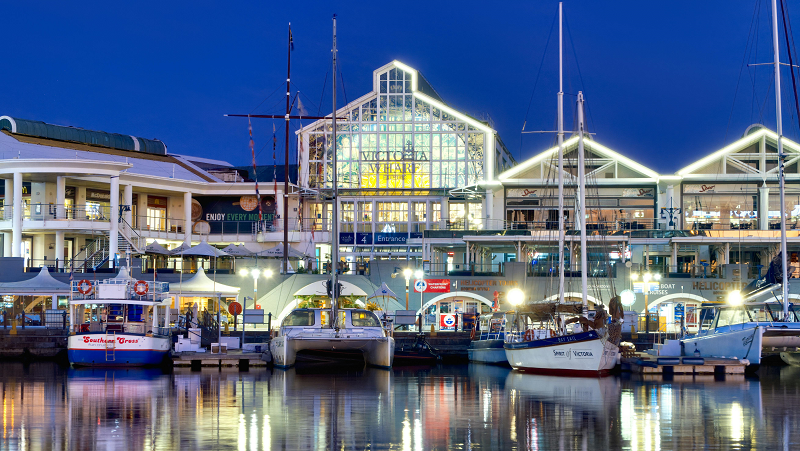
Sharing shelf space with Zara, H&M, Country Road, and Woolworths sounds intimidating, but it’s the wrong way to frame the competition. These international and national retailers occupy their lane — you need to occupy yours. The customers walking through Victoria Wharf are actively looking for variety, and many specifically want something they can’t find at a chain store.
Your positioning advantage comes from specificity. A tightly defined brand story, a clear target customer, and a product that solves a specific problem or fills a specific desire will always find its audience in a high-traffic environment. Retailers know this too — they stock you because you bring something their anchor tenants don’t.
Why Local Identity Gives You a Competitive Edge
South African consumers and international tourists alike have a strong appetite for locally made, authentically designed products at V&A Waterfront. This is especially true in gift, homeware, fashion accessories, and food categories. A product that carries genuine South African identity — in its materials, its story, its design — has a built-in emotional appeal that imported goods simply cannot replicate.
Lean into this deliberately. If your product is handcrafted in Cape Town, uses local materials, or is inspired by South African culture or landscape, that narrative belongs front and centre in your brand communication, your packaging, and your retailer pitch. Learn more about the vibrant V&A Waterfront in Cape Town to enhance your brand’s story.
The Role of Packaging, Presentation, and Consistency
At this level, packaging is not decoration — it’s part of the product. Retailers in a premium environment like V&A Waterfront will assess how your product looks on a shelf before they think about anything else. If your packaging looks homemade, inconsistent, or out of place next to premium brands, that’s a dealbreaker regardless of what’s inside.
Consistency matters just as much as quality. Every unit a retailer receives needs to look identical to the last. This means professional printing, standardised labelling, and a packaging format that suits retail display. It also means your brand assets — logo, colour palette, tone of voice — need to be applied uniformly across every touchpoint a retailer will encounter.
The Different Retail Spaces at V&A Waterfront
V&A Waterfront is not a single retail environment — it’s a collection of distinct precincts, each with its own character, tenant mix, and ideal brand profile. Understanding which space is right for your brand will save you time, improve your pitch, and significantly increase your chances of getting a yes.
Victoria Wharf: The Main Shopping Mall
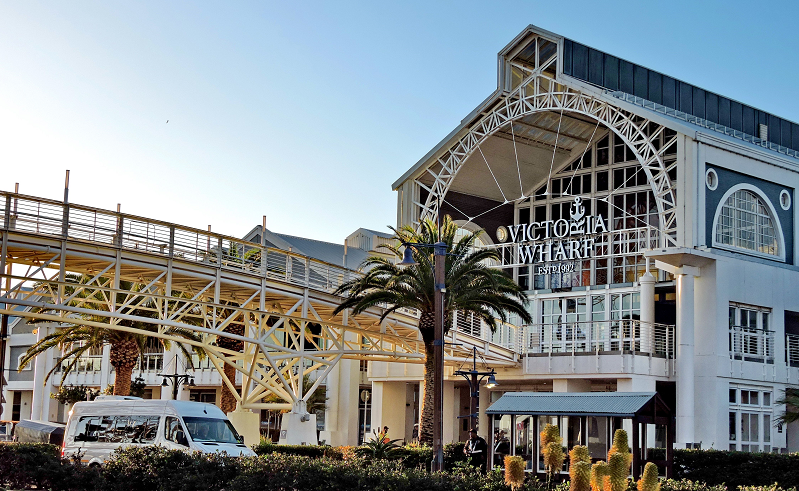
Victoria Wharf is the commercial heart of the precinct — a large, multi-level shopping centre anchored by major retailers and high-street brands. This is where you’ll find Zara, H&M, Woolworths, Cape Union Mart, Sportsman’s Warehouse, and the luxury wing featuring premium local and international labels. Securing a tenancy or stockist arrangement in Victoria Wharf typically requires an established brand with proven retail performance, strong margins, and the operational capacity to supply consistently at scale.
For most emerging brands, Victoria Wharf is a destination you work toward — not where you start. But that doesn’t mean it’s out of reach. Several South African brands have used the Watershed as a proving ground before making the jump to a Victoria Wharf stockist relationship.
The Watershed: Best Entry Point for Independent Brands
The Watershed is where independent, creative, and artisan brands belong. With over 365 brands represented across its market-style layout, it’s designed specifically to showcase local makers, designers, and entrepreneurs. The format is accessible, the community is supportive, and the foot traffic is genuinely strong — tourists and locals both gravitate toward the Watershed for unique finds they won’t see anywhere else.
Makers Landing and Speciality Retail Zones
Makers Landing sits at the working harbour end of the precinct and focuses on food, craft, and local production. It’s an immersive retail and dining experience that suits food brands, artisan producers, and businesses with a strong “made here” story. Beyond these anchor zones, V&A Waterfront also includes speciality retail areas, pop-up opportunities, and commercial leasing across various heritage and contemporary buildings throughout the 123-hectare site.
How to Approach V&A Waterfront Retailers the Right Way
Most brands get this wrong. They send a generic email, attach a product catalogue, and wait. In a precinct with 500+ tenants and hundreds of brands trying to get in at any given time, that approach goes nowhere. Getting a positive response requires preparation, relevance, and a pitch that speaks directly to what that specific retailer needs.
The right approach starts well before you make contact. You need to walk the precinct, identify the stores that genuinely align with your product category, study how they merchandise, understand their price architecture, and know exactly where your product would sit on their floor. Only then are you ready to reach out.
Research the Retailers That Align With Your Product Category
Start by walking Victoria Wharf, the Watershed, and Makers Landing with a notepad, not a sales bag. You’re looking for stores whose existing product range has a clear gap your brand fills, whose price points align with yours, and whose customer feels like your customer. Note the store names, the categories they carry, and how they display products. This on-the-ground research is what separates a relevant pitch from a random one.
Build a Retailer-Ready Brand Kit Before You Make Contact
A retailer-ready brand kit is the minimum entry requirement for any serious conversation. It needs to be professional, concise, and immediately useful to a buyer who receives dozens of inquiries. Your brand kit should include:
- A one-page brand overview — who you are, what you make, and who your customer is
- High-resolution product photography — clean, well-lit, on white and in lifestyle context
- A product catalogue with SKUs, dimensions, and retail and wholesale pricing clearly listed
- Your margin structure — most retailers at this level expect between 40% and 60% margin
- Minimum order quantities and lead times for restocking
- Any press coverage, stockist logos, or social proof that validates your brand
If any of these elements are missing or look unprofessional, stop and fix them before reaching out. A buyer’s first impression of your brand kit is their first impression of how you operate as a business partner.
How to Write a Pitch That Gets a Response
Your outreach email should be short, specific, and focused entirely on what’s in it for the retailer. Open with a one-sentence description of your product and why it’s relevant to their store specifically. Mention that you’ve visited the store and identified a gap or a complementary fit. Include two or three product images in the body of the email — not just an attachment — and link to your website or lookbook. Close with a single, low-friction ask: a 15-minute call or a time to bring samples in.
Avoid leading with your own story, your passion for the craft, or how long you’ve been in business. Buyers care about margin, customer fit, and reliability. Answer those three things implicitly in your pitch and your response rate will be significantly higher than the average cold outreach. For more insights, consider exploring business opportunities at the V&A Waterfront.
Following Up Without Being Annoying
One follow-up email, sent five to seven business days after your initial outreach, is professional. Two follow-ups with no response is the limit before you move on or try a different contact. Keep your follow-up brief — reference your previous email, offer to send samples, and restate your ask. Don’t reattach everything or write a longer pitch. The goal of the follow-up is simply to get back into their inbox cleanly.
If you’re not getting responses via email, try a different entry point. Some V&A Waterfront retailers are more responsive to in-person visits during quieter trading hours — typically weekday mornings. Bring a small, well-presented sample set and ask to speak to the store manager or buyer directly. This approach takes more confidence but often yields faster results than digital outreach alone.
Pricing Your Product for a Premium Retail Environment
Pricing is where many otherwise strong brands fall apart in premium retail conversations. Get this wrong and you either price yourself out of retailer interest or you erode your own margins to the point where the stockist relationship isn’t sustainable. For V&A Waterfront retailers, the environment is a premium one — customers shopping here expect to pay for quality, and retailers know that. Price accordingly.
How to Calculate a Retail Margin That Works for Both Sides
Retail margin at this level typically works on a keystone or above-keystone model. Here’s how the numbers need to stack up for a viable retailer relationship:
- Your cost of goods (COG) — everything it takes to produce one unit, including materials, labour, and packaging
- Your wholesale price — typically 2x to 2.5x your COG, leaving room for your own margin
- The retailer’s margin — most premium retailers require between 40% and 60% on the retail selling price
- The retail price — what the end customer pays, which must feel appropriate for the V&A Waterfront environment
As a practical example: if your cost of goods is R80 per unit, your wholesale price should sit around R160 to R200. A retailer applying a 50% margin would then retail the product at R320 to R400. That final price needs to make sense on a V&A Waterfront shelf — neither so cheap it looks out of place, nor so expensive it stops the sale.
If the numbers don’t work at this calculation, the answer isn’t to squeeze your wholesale price. The answer is to reduce your cost of goods through better supplier relationships, higher production volumes, or a packaging redesign — or to reposition the product at a higher retail price point that the market will support.
Why Pricing Too Low Hurts Your Brand at This Level
Underpricing in a premium retail environment sends the wrong signal. In a precinct where customers are surrounded by established international and premium local brands, a product priced significantly below its category average reads as lower quality — even if it isn’t. Price is part of the brand communication, and at V&A Waterfront, it needs to hold its own against everything else on that floor.
Beyond perception, low pricing creates a structural problem. If your retail price is too low, your wholesale price is lower still, which means your own margin per unit is unsustainable at any meaningful volume. Brands that underprice often find themselves unable to restock quickly enough, unable to invest in marketing support, and unable to maintain the quality consistency that got them in the door in the first place.
The Watershed Is Your Fastest Route In
If you’re an independent brand, a maker, a designer, or an early-stage product business, the Watershed is the most direct and accessible entry point into the V&A Waterfront retailers ecosystem. It was built specifically for this purpose — to give South African creative entrepreneurs a world-class platform inside Africa’s most visited retail destination.
The format works in your favour. Unlike a traditional retail tenancy which requires a long-term lease commitment and a fully built-out store, the Watershed operates on a market and studio model that accommodates smaller brands at a much lower barrier to entry. You don’t need to be a finished, scaled business to trade here — you need a strong product, a consistent brand, and the ability to show up reliably.
What the Watershed’s 365+ Local Brand Model Means for New Brands
With over 365 brands represented, the Watershed has genuine critical mass. That density of local makers creates a destination in itself — shoppers and tourists come specifically to browse independent brands they won’t find in mainstream retail. Being part of that ecosystem means you benefit from the collective draw, not just your own marketing. It also puts you in proximity to other makers, which creates organic opportunities for collaboration, shared learning, and community credibility.
How to Apply and What to Expect
The application process for the Watershed involves submitting your brand profile, product range, and pricing through V&A Waterfront’s leasing and business development channels. Expect to provide product samples, demonstrate brand consistency, and show that your pricing suits the retail environment. Selection is competitive, but the process is structured to support local entrepreneurs — not exclude them. Once accepted, you’ll be allocated a trading space and integrated into the Watershed’s operational framework, which includes access to the precinct’s 23 million annual visitors from day one.
How to Keep Your Brand on Shelves Once You Get In
Getting the yes is the milestone most brands obsess over — but keeping your brand on shelves is where the real work begins. Retailers at V&A Waterfront have options. If your stock runs out, your reorders are slow, or your product stops performing, that space will go to a brand that manages those things better. Retention requires the same level of intention as acquisition.
Consistent Stock Management and Lead Times
The fastest way to lose a retailer relationship is to run out of stock without warning. In a high-footfall environment like V&A Waterfront, an empty shelf or a gap in your display isn’t just a missed sale — it signals to the retailer that you’re not ready to operate at this level. Set up a restocking system before you land your first order, not after. Know exactly how long it takes you to produce, package, and deliver a new batch, and communicate that timeline proactively to every stockist you work with.
Build a buffer into your production schedule. If your actual lead time is three weeks, tell retailers four. That extra week absorbs delays, quality checks, and logistics without ever leaving a shelf bare. Track your sell-through rate at each stockist so you can anticipate reorder timing rather than reacting to it. The brands that stay on V&A Waterfront retailers shelves long-term are the ones that make restocking easy and predictable for the retailer.
Supporting Retailers With Marketing and In‑Store Visibility
Retailers appreciate brands that don’t just drop stock and disappear. When you actively support your stockists with marketing, you increase your sell-through rate, strengthen the retailer relationship, and build your own brand awareness simultaneously. Even modest support goes a long way in demonstrating that you’re a serious, invested partner.
- Tag your V&A Waterfront stockist in social media posts and direct your audience to purchase in-store
- Provide professionally designed shelf talkers, product cards, or display materials that improve in-store presentation
- Offer to run a short in-store activation or product demonstration during peak trading periods
- Share content from inside the store — this generates social proof for both your brand and the retailer
- Coordinate with the retailer around seasonal promotions, holidays, or V&A Waterfront-wide events
In-store visibility is particularly important in a dense retail environment. If your product is sitting flat on a shelf with no signage and no story, it competes purely on packaging against everything around it. A small, well-designed product card that tells your brand story, explains what makes the product unique, or highlights its South African origin can be the difference between a customer picking it up or walking past.
You don’t need a large marketing budget to do this well. A consistent Instagram presence, a few professionally printed display cards, and one in-store activation per season is enough to keep your brand visible and your retailer engaged. The brands that treat their stockists as partners — rather than just distribution points — are the ones that get prime placement, reorder calls, and referrals to other buyers in the precinct.
Using Foot Traffic Data to Prove Your Product’s Value
V&A Waterfront’s 23 million annual visitors generate real, trackable consumer behaviour. Once your product is on shelves, your sell-through data becomes one of the most powerful tools you have — both for retaining your current stockist and for pitching new ones. A retailer at this level is not sentimental about product decisions. They’re looking at what sells, how fast, and at what margin.
Ask your stockist for sales data at regular intervals — monthly is ideal. Track units sold, peak selling periods, and any patterns around events, seasons, or promotions. This data tells you when to push for a reorder, when to introduce a new SKU, and which products in your range have the strongest commercial case. It also gives you concrete numbers to use when approaching your next retailer.
Being able to say “this product achieved X units per month at V&A Waterfront over six months” is a significantly more compelling pitch than any brand story alone. Retailers respond to evidence. Use the foot traffic and sales performance of one stockist relationship to build the credibility that opens the next door.
Getting Into V&A Waterfront Retailers Is a Launchpad, Not Just a Sale
Landing your first V&A Waterfront stockist is not the finish line — it’s the beginning of a much larger retail trajectory. The credibility, visibility, and sell-through data you build in this precinct creates a commercial track record that speaks to buyers, press, and distributors across South Africa and beyond. Brands that approach V&A Waterfront Retailers with a long-term mindset — investing in relationships, marketing support, and operational consistency — consistently find that one stockist becomes five, and a local presence becomes a national one. The work you put in here compounds.
FAQ’s About Getting Your Brand into V&A Waterfront Retailers
Here are the most common questions brands ask when exploring retail opportunities at V&A Waterfront.
How Do I Get My Product Into V&A Waterfront Stores?
Getting your product into V&A Waterfront stores requires a combination of preparation, targeted outreach, and operational readiness. There is no single universal application process — it depends on which precinct and which specific retailer or space you’re targeting.
The practical steps to get started are:
- Walk the precinct and identify the stores that align with your product category and price point
- Build a professional brand kit with product photography, pricing, MOQs, and lead times
- Write a targeted pitch email that focuses on retailer benefit and product fit — not your personal story
- For the Watershed, contact V&A Waterfront’s leasing and business development team directly with your brand profile
- Bring samples in person during quieter trading hours if digital outreach goes unanswered
The most important thing you can do before any of this is ensure your brand is retail-ready — consistent packaging, professional presentation, and a margin structure that works for a premium retail environment.
Does V&A Waterfront Have a Formal Application Process for New Brands?
For spaces like the Watershed, V&A Waterfront does have a structured application and selection process managed through V&A Waterfront Holdings’ leasing and business development channels. For independent retail stockist relationships — approaching an existing tenant store to carry your product — the process is brand-led. You approach the retailer directly, present your brand kit and samples, and negotiate the terms of the arrangement. Both routes require a retail-ready brand and a product that fits the precinct’s positioning.
What Types of Products Sell Best at V&A Waterfront?
Products that perform consistently well at V&A Waterfront tend to share a few common characteristics: they have a clear South African identity or story, they sit in accessible to mid-premium price ranges, and they work as both everyday purchases and considered gifts. Categories that perform strongly include locally designed fashion accessories, handcrafted homeware and décor, artisan food and beverage products, wellness and beauty items made with local ingredients, and original art and print-based products. For more insights, check out this guide on shopping at V&A Waterfront.
The international tourist segment is particularly responsive to products that feel authentically South African and are not available through global retail chains. If your product carries a genuine local story — in its materials, its makers, or its design inspiration — that narrative is a commercial asset in this environment, not just a marketing nice-to-have.
Is The Watershed a Good Starting Point for Small or Independent Brands?
The Watershed is the single best entry point for independent brands at V&A Waterfront. With over 365 local brands operating within its market and studio format, it is specifically designed to support South African makers, designers, and creative entrepreneurs. The barrier to entry is lower than a traditional retail tenancy, the community is collaborative, and the exposure to 23 million annual visitors is immediate. Many brands that are now stocked in mainstream retail and export markets started their V&A Waterfront journey at the Watershed.
How Many People Visit V&A Waterfront Each Year?
V&A Waterfront receives more than 23 million visits annually, making it one of the most visited destinations on the African continent. That figure includes local Cape Town residents, domestic tourists, and a substantial volume of international visitors — a mix that gives brands stocked here exposure to a genuinely diverse and high-spending consumer audience.
For context, that level of foot traffic means your product has the potential to be seen by hundreds of thousands of shoppers each month, across every season of the year. Unlike seasonal or event-driven retail formats, V&A Waterfront trades at high volume consistently — a function of its mix of tourism, leisure, hospitality, and everyday retail that keeps visitors returning throughout the year.
If you’re ready to take your brand to the next level, V&A Waterfront Reatilers offer unmatched exposure and a thriving community of over 500 tenants to grow alongside.