

Google Business Profile for Cape Town Shops
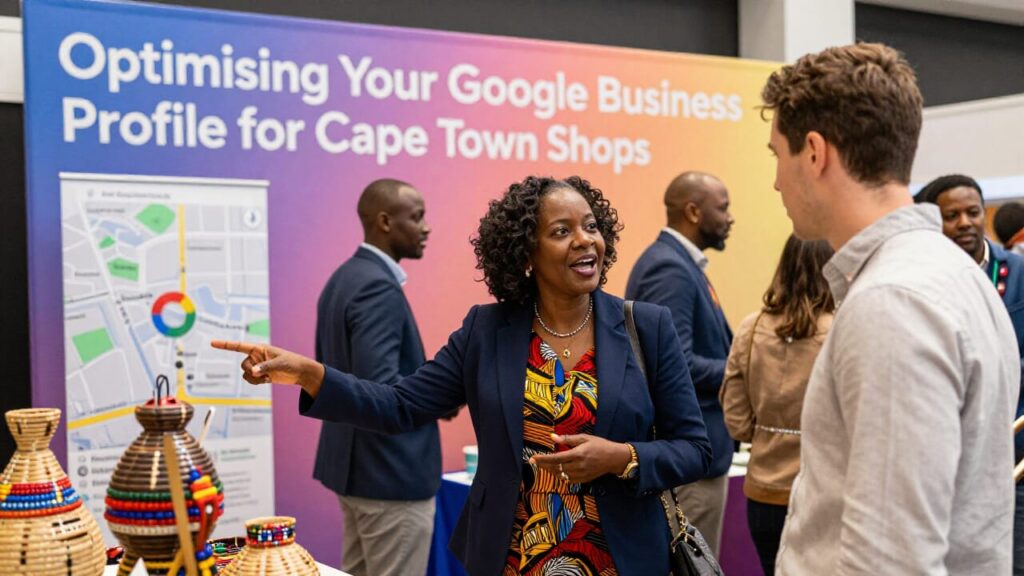
The transformative power of Google Business Profile isn’t theoretical — it’s being demonstrated daily by forward-thinking Cape Town shops. Businesses across diverse industries are using this platform to overcome traditional limitations and expand their reach beyond what was previously possible for local enterprises.
Key Takeaways: Google Business Profile for Cape Town Shops
- Google Business Profile offers Cape Town shops free visibility that turns local searchers into real customers
- Properly optimized profiles can increase foot traffic by up to 70% for physical store locations
- Cape Town businesses like NativeChild have transformed their reach through strategic profile management
- Tourist-friendly businesses can capture international visitors before they even arrive in South Africa
- The platform provides valuable customer insights that help shops make smarter business decisions
How Google Business Profile Transforms Cape Town Shops
When someone searches for your Cape Town shop online, what do they see first? For most local businesses, Google Business Profile (GBP) creates that crucial first impression. This powerful, completely free tool has revolutionized how local shops connect with customers in the Mother City. Cape Biz Toolkit has seen hundreds of local entrepreneurs transform their digital presence through proper GBP optimization.
Picture this: a tourist planning their Cape Town trip searches for “handmade jewelry Cape Town” and instantly sees your shop, complete with stunning photos, glowing reviews, and your exact location on Google Maps. That’s not just convenience—it’s a powerful marketing engine working around the clock to drive customers directly to your doorstep.
From Woodstock workshops to V&A Waterfront boutiques, businesses that properly optimize their Google Business Profiles are experiencing dramatic increases in visibility, foot traffic, and sales. The best part? Unlike traditional advertising, this platform costs absolutely nothing while delivering qualified local customers who are actively searching for what you offer.
Why Your Cape Town Shop Needs a Google Business Profile Today
Cape Town’s commercial landscape has transformed dramatically. Just a decade ago, a prime physical location or word-of-mouth might have been enough to sustain a local business. Today, your digital storefront matters just as much as your physical one—perhaps even more. When potential customers need something, their first action is rarely opening a phone book or asking for recommendations. Instead, they reach for their smartphone and search Google.
Without a Google Business Profile, your shop essentially becomes invisible to these potential customers. It’s like having a beautiful store with the lights turned off and no signage. You might offer the best products or services in Cape Town, but if people can’t find you online, you’re missing out on significant revenue opportunities every single day.
Local Search Statistics That Will Shock Cape Town Shop Owners
“Near me” searches have increased over 900% in recent years. When these searches happen in Cape Town, is your business showing up? The reality is stark: businesses without optimized Google profiles are hemorrhaging customers to competitors who have embraced this digital tool. Nearly 76% of people who search for something nearby on their smartphone visit a related business within 24 hours. Perhaps most telling, 28% of these searches result in a purchase.
For tourism-heavy Cape Town, these numbers are even more significant. International visitors frequently plan their entire itineraries based on Google searches and Maps reviews before even setting foot in South Africa. Without a strong Google Business Profile, you’re invisible to this lucrative market of ready-to-spend tourists.
How Google Maps Drives Foot Traffic to Physical Stores
Google Maps integration is perhaps the most powerful feature of Google Business Profile for Cape Town shops. When your business appears on Maps with accurate information, you remove friction from the customer journey. A potential customer doesn’t just discover you exist—they can immediately see your exact location, get directions, check your opening hours, and even call you with a single tap.
This seamless experience transforms casual browsers into walking customers. For Cape Town’s complex geography—with businesses spread across the City Bowl, Atlantic Seaboard, Southern Suburbs, and beyond—accurate Maps presence is particularly crucial. Visitors unfamiliar with the area rely almost exclusively on Google Maps to navigate between attractions, making your presence there non-negotiable for capturing tourist traffic.
The Tourism Connection: Capturing Visitors Before They Arrive
Cape Town’s economy thrives on tourism, with millions of international and domestic visitors exploring the city each year. These tourists begin planning their trips weeks or months in advance, researching everything from Table Mountain tours to where they’ll shop for souvenirs. A properly optimized Google Business Profile ensures your shop appears during this critical planning phase.
International visitors especially rely on Google reviews to make decisions about which local businesses to trust. Your profile serves as a virtual ambassador for your business, showcasing your unique offerings to people who may be thousands of kilometers away but already planning to visit your neighborhood. This pre-arrival visibility gives optimized businesses a massive advantage in capturing tourist spending.
- International tourists spend 67% more time researching local businesses before travel compared to five years ago
- 84% of travelers use Google Maps to plan activities while visiting new cities
- Businesses with 50+ Google reviews are 46% more likely to be visited by tourists than those with fewer reviews
- Photos on your Google Business Profile increase customer interest by up to 35%
- Cape Town businesses experience seasonal search spikes aligned with tourism peaks in December-February and June-August
5 Major Benefits of Google Business Profile for Cape Town Businesses
Beyond simply being found online, Google Business Profile offers Cape Town shop owners a comprehensive suite of business-building tools. From managing your reputation to understanding customer behavior, this platform delivers enterprise-level marketing capabilities to even the smallest local businesses. The businesses thriving in today’s competitive Cape Town market are those leveraging GBP’s full potential rather than settling for basic listings.
1. Free Marketing That Works While You Sleep
Traditional advertising demands constant investment. Newspaper ads disappear after a day, radio spots play once and vanish, and billboard contracts expire. Your Google Business Profile, however, works tirelessly around the clock without additional cost. Once properly optimized, it continues driving customers to your door whether you’re open or closed, awake or asleep.
This “always-on” marketing is particularly valuable for Cape Town’s many small businesses operating with limited marketing budgets. The platform levels the playing field, allowing boutique local shops to compete with national chains for visibility. And unlike paid advertising that stops the moment you stop paying, your Google presence maintains your visibility indefinitely.
2. Stand Out From Competing Local Businesses
With hundreds of shops competing for attention in Cape Town’s bustling commercial landscape, differentiation is essential. Your Google Business Profile provides multiple opportunities to showcase what makes your business unique. From highlighting specific services to showcasing your distinctive products through photos, GBP lets you tell your shop’s story in a compelling way.
For specialty shops, the attributes feature is particularly powerful. A vegan restaurant in Kloof Street can specifically mark itself as offering plant-based options. A sustainable fashion boutique in Woodstock can highlight eco-friendly practices. These searchable attributes help you attract precisely the customers looking for your specific offerings rather than competing for general traffic.
3. Build Customer Trust Through Reviews
In today’s digital marketplace, online reviews function as the new word-of-mouth. An impressive 91% of consumers read online reviews before making purchase decisions, and 84% trust these reviews as much as personal recommendations. Your Google Business Profile serves as your primary review collection and display platform, creating social proof that builds trust with potential customers.
Cape Town shops with substantial positive reviews enjoy a measurable advantage over competitors. Beyond quantity, the quality and recency of reviews matter significantly. Businesses that actively engage with reviews—thanking positive reviewers and professionally addressing concerns—demonstrate exceptional customer service before a potential customer ever walks through the door.
4. Control Your Digital First Impression
When someone searches for your business specifically or for products you offer nearby, your Google Business Profile determines what they see. Without an optimized profile, that crucial first impression is left to chance. With proper optimization, you control the narrative, ensuring potential customers see your business exactly as you intend.
This control extends to handling outdated or incorrect information. Business hours change, phone numbers get updated, and seasonal offerings rotate. Your Google profile gives you direct control over this information, preventing the frustration of customers arriving to find closed doors or calling disconnected numbers. For Cape Town’s seasonal businesses, this flexibility is particularly valuable during tourism fluctuations.
5. Gain Valuable Customer Insights
Perhaps the most underutilized benefit of Google Business Profile is its robust analytics. The Insights dashboard shows exactly how customers are finding you, what search terms they’re using, which actions they’re taking on your profile, and even what times of day generate the most interest. This data would cost thousands from a market research firm, but it’s provided completely free.
Smart Cape Town shop owners use these insights to make informed business decisions. If you notice customers searching for specific products you don’t currently offer, that’s valuable market research. If you see search traffic peaking on weekends when your shop is closed, perhaps adjusting hours would capture additional revenue. These data-driven decisions provide a competitive edge in Cape Town’s dynamic market.
Setting Up Your Google Business Profile: A Step-By-Step Guide
Getting started with Google Business Profile is straightforward, even for shop owners with limited technical experience. The platform is designed for accessibility, walking you through each step of the process. The initial setup takes approximately 30 minutes, with verification typically completing within 1-2 weeks.
The effort invested in properly setting up your profile pays dividends for years to come. While a basic listing provides some benefit, businesses that complete every section of their profile receive 7 times more clicks than those with minimal information. This comprehensive approach signals to both Google and potential customers that you’re a legitimate, professional operation worthy of their attention and business.
1. Claim Your Business Listing
Begin by visiting business.google.com and searching for your business name. If your shop appears, you’ll need to claim the existing listing. If no listing exists, you’ll create a new one by entering your business name, category, and location information. This initial step establishes your basic presence and begins the verification process.
For businesses with multiple locations across Cape Town, you can manage all locations from a single dashboard. This centralized management is particularly valuable for restaurants, retail chains, or service businesses with branches in different Cape Town neighborhoods. Each location maintains its own distinct profile while allowing consistent brand presentation.
If you discover someone else has already claimed your business, don’t panic. Google provides a straightforward ownership request process that resolves most conflicts quickly. Having proper documentation of your business ownership speeds this process considerably.
- Have your business registration documents readily available
- Use an email address that matches your business domain for faster verification
- Ensure your business name exactly matches your signage and legal documents
- Select the most specific category available that describes your primary business
- Add secondary categories to capture additional relevant searches
2. Verify Your Ownership
Verification confirms you’re the legitimate owner or manager of the business. For most Cape Town shops, Google offers verification by postcard (containing a PIN code) sent to your physical address. Alternative verification methods may be available for some businesses, including phone, email, or instant verification for businesses using certain Google services. This critical security step prevents unauthorized changes to your business information and unlocks full profile management capabilities.
3. Complete Your Profile Information
Once verified, it’s time to provide comprehensive information about your Cape Town shop. Complete every available field—this isn’t just about informing customers, but also helping Google understand exactly what your business offers and when it should appear in relevant searches. The more specific information you provide, the more effectively Google can match your business with interested customers.
Your business description is particularly important. Use this 750-character space to highlight what makes your Cape Town shop special. Focus on your unique selling proposition and include relevant keywords naturally. For example, rather than simply stating “We sell jewelry,” a V&A Waterfront shop might write “We handcraft sterling silver jewelry inspired by Cape Town’s natural beauty, specializing in ocean-themed designs that capture the Atlantic’s magnificent colors.”
Business hours deserve special attention, particularly for Cape Town’s tourism-oriented businesses that may have seasonal variations. Set special hours for holidays, and update these regularly to ensure accuracy. Few things frustrate potential customers more than arriving at your shop only to find unexpected closure.
- Include your complete physical address with unit number if applicable
- Add every phone number customers might use to reach you
- List your website URL and all relevant social media profiles
- Specify all payment methods you accept, including mobile options
- Add attributes specific to your business type (accessibility features, outdoor seating, etc.)
4. Add High-Quality Photos
Visual content dramatically influences consumer decision-making, particularly for Cape Town’s visually-oriented businesses. Upload at least 10 high-quality photos showcasing your products, interior, exterior, and team. Research shows listings with photos receive 42% more requests for directions and 35% more website clicks than those without visual content. For Cape Town’s tourism and retail sectors, this visual representation is particularly crucial to attracting international visitors who rely heavily on images when making decisions about unfamiliar locations.
Choose photos that authentically represent your business while highlighting your most appealing features. For restaurants, showcase signature dishes; for retail shops, feature your bestselling products; for service businesses, show your team in action. Consider hiring a professional photographer for key shots – this one-time investment continues generating returns through increased customer interest. Remember, these images create expectations about your business, so ensure they accurately reflect the current customer experience.
Optimizing Your Cape Town Shop’s Profile For Maximum Impact
Basic setup is just the beginning. The businesses seeing transformative results from Google Business Profile are those that treat it as an ongoing marketing channel rather than a one-time listing. Optimization is the process of continually refining your profile to improve visibility and conversion rates. This involves strategically selecting categories, crafting compelling descriptions, regularly updating photos, and leveraging every available feature to showcase your Cape Town shop’s unique value proposition.
Essential Categories and Attributes For Cape Town Businesses
Your primary category is perhaps the single most important ranking factor for local search visibility. Choose the most specific category that accurately describes your main business function. For example, rather than “Restaurant,” a seafood specialist might select “Seafood Restaurant.” You can add up to nine additional categories to capture related searches, but your primary category carries the most weight in determining when your business appears in results.
Attributes provide additional specificity about your business features and services. These searchable characteristics help customers find exactly what they’re looking for. A Bo-Kaap café might highlight “Outdoor Seating,” “Wifi Available,” and “Cape Malay Cuisine” to attract both locals seeking specific amenities and tourists interested in authentic cultural experiences. Review available attributes regularly, as Google frequently adds new options relevant to different business types and changing consumer interests.
Crafting a Description That Converts Browsers Into Buyers
Your business description is limited to 750 characters, making every word precious. Begin with your most compelling value proposition – what makes your Cape Town business uniquely qualified to serve customer needs? Incorporate relevant keywords naturally, particularly those reflecting local search intent like neighborhood names, nearby landmarks, or Cape Town-specific terminology. Avoid generic statements in favor of specific, differentiating details that help potential customers understand exactly why they should choose your business.
For example, rather than “We sell souvenirs in Cape Town,” a craft shop might write: “Our Green Market Square workshop features handcrafted African art created by local township artisans using traditional techniques. Each piece tells a uniquely South African story, offering visitors authentic mementos of their Cape Town experience while supporting community development.”
Photos That Showcase Cape Town’s Unique Appeal
Strategic photography goes beyond simply showing your products or premises. For Cape Town businesses, contextualizing your location within the city’s iconic landscape creates powerful appeal, particularly for tourism-oriented shops. A restaurant might include views from its terrace showing Table Mountain; a boutique could feature products with the distinctive Bo-Kaap colorful houses as backdrop; a tour operator might showcase happy clients at Cape Point.
Update photos seasonally to reflect current offerings and appearances. This is particularly important for Cape Town’s seasonally-variable businesses like beachfront cafés, wine tour operators, or fashion retailers. Fresh, current imagery signals an active, well-maintained business while allowing you to highlight seasonal specialties or promotions. Remember, many customers make decisions based primarily on visual impression, often without reading a single word of text.
Managing Customer Reviews To Build Your Reputation
Reviews have become the digital currency of business reputation. For Cape Town shops, particularly those serving tourists who lack local references, these public testimonials often determine whether a potential customer chooses your business or your competitor’s. A proactive review management strategy is essential for building and maintaining a positive online presence that converts browsers to customers. To enhance your strategy, consider utilizing tools like the Google Business Profile to manage and respond to reviews effectively.
How To Get More Positive Reviews
The simplest approach is often most effective: just ask. Create a short, memorable URL to your review page (using Google’s marketing kit) and share it with satisfied customers. Train staff to mention reviews during positive interactions, perhaps highlighting how customer feedback helps your small local business compete with larger operations. For retail shops, consider adding QR codes on receipts or packaging that link directly to your review page, making the process effortless for customers.
Timing matters significantly. Research shows requests sent within 24 hours of a positive experience generate the highest response rates. For restaurants, this might mean a follow-up email the morning after a meal; for tour operators, an immediate text following a successful excursion; for retail shops, a thank you email shortly after purchase. Avoid incentivizing reviews, as this violates Google’s policies and can result in penalties.
Responding To Negative Feedback Professionally
Negative reviews, while painful, present valuable opportunities when handled correctly. Respond promptly (within 24 hours ideally) in a calm, professional manner that demonstrates your commitment to customer satisfaction. Begin by thanking the reviewer for their feedback, acknowledge any legitimate concerns without making excuses, and explain specific steps you’re taking to address the issue. When appropriate, offer to continue the conversation privately, providing contact information for resolution.
Remember that your response isn’t just for the dissatisfied customer – it’s for hundreds of potential customers evaluating how your business handles problems. A thoughtful, solution-oriented response to criticism often impresses prospects more than a perfect review record. For Cape Town’s tourism-oriented businesses, demonstrating excellent service recovery is particularly valuable in building trust with international visitors who may be concerned about service standards in unfamiliar territory.
Using Reviews To Improve Your Business
Beyond reputation management, reviews provide invaluable business intelligence. Analyze feedback patterns to identify operational strengths and weaknesses. Are customers consistently praising your unique wine selection but mentioning slow service? Is your boutique’s personalized attention drawing compliments while sizing inconsistency creates frustration? This direct customer feedback highlights improvement opportunities that might otherwise remain hidden.
Forward-thinking Cape Town businesses systematically categorize review content and track trends over time. This analysis often reveals actionable insights about customer expectations, competitive advantages, and improvement opportunities. When making operational changes based on review feedback, communicate these improvements in your responses – this demonstrates responsiveness and may encourage previous detractors to return.
Using Google Posts To Drive Special Promotions
Google Posts function as mini-advertisements displayed directly within your Business Profile. This frequently overlooked feature allows Cape Town shops to promote special offers, events, announcements, and new products directly to people actively searching for related businesses. Unlike social media posts that require followers to see your content, Google Posts appear precisely when potential customers are searching for what you offer, creating perfectly-timed marketing opportunities with exceptional conversion rates.
Content Ideas That Work For Cape Town Audiences
The most effective posts combine timely relevance with clear value propositions. New product announcements work particularly well for retail shops, especially when featuring uniquely South African items that appeal to tourists. Limited-time promotions create urgency, with “weekend special” posts typically generating higher engagement than general announcements. Behind-the-scenes content humanizes your business, such as introducing staff members or showing artisanal production processes that emphasize authentic local craftsmanship.
For Cape Town’s experience-based businesses like restaurants, wine bars, and activity providers, event promotions perform exceptionally well. Whether you’re hosting a local wine tasting, special menu weekend, live music night, or seasonal workshop, Google Posts ensure these events reach people actively looking for things to do in your area. Include essential details (date, time, cost) and a clear call-to-action that simplifies conversion, such as “Book Now” or “Call for Reservation.”
Seasonal Promotion Strategies For Tourism Peaks
Cape Town’s tourism patterns create predictable demand fluctuations that savvy businesses leverage through strategic Google Posts. During the November-February high season, posts highlighting your unique offerings for international visitors can capture attention from the surge of Northern Hemisphere travelers escaping winter. These might emphasize authentic South African experiences, locally-made souvenirs, or special services for international guests like currency exchange, shipping options, or multilingual staff.
During shoulder seasons (March-May and September-October), posts targeting domestic travelers and locals become more effective. These might feature local resident discounts, weekday specials, or loyalty programs that build business during traditionally slower periods. The winter low season (June-August) presents opportunities for specialized posts promoting indoor activities, winter comfort foods, or rainy-day experiences that convert weather challenges into business opportunities.
Measuring Success: Understanding Your GBP Insights
Google provides robust analytics through the Insights dashboard, offering Cape Town shop owners valuable data about customer interactions with their profile. This information helps you understand how customers find your business, what actions they take after discovering you, and which elements of your profile generate the most engagement. By analyzing these metrics regularly, you can refine your strategy to maximize return on your time investment and identify specific opportunities for business growth.
Key Metrics To Track Monthly
How customers find your listing is perhaps the most revealing metric, showing whether people discover you through direct searches (using your business name), discovery searches (using categories, products, or services), or Google Maps. An increasing percentage of discovery searches indicates improving visibility for new customers who weren’t specifically looking for your business. Total views compares your Search appearances with Maps appearances, helping you understand which platform drives more traffic to your profile.
Customer actions tracks what people do after finding your listing – calling your business, visiting your website, requesting directions, or messaging you directly. These conversion metrics help evaluate your profile’s effectiveness at driving actual business rather than just impressions. Photo views compare engagement with your images versus competitors, providing insight into whether your visual content effectively captures attention in your market segment.
How To Interpret Search Queries
The search queries report reveals exactly what terms customers use to find your business. This goldmine of keyword data helps you understand customer intent and adjust your profile to match searching behavior. Look for unexpected terms that reveal new customer needs or interests you might address. For example, a café owner might discover numerous searches for “gluten-free breakfast Cape Town” and adjust their menu and business attributes to capture this previously unrecognized demand.
Track query changes seasonally to identify shifting customer priorities throughout the year. A tour operator might notice “indoor activities Cape Town” spikes during winter months, while “hiking Table Mountain sunrise” trends during summer. This intelligence allows you to adapt your content, services, and special offers to align perfectly with current customer interests rather than guessing what might attract business during different seasons.
Using Customer Action Data To Improve Your Business
Action data reveals critical conversion patterns that inform business decisions. If many customers request directions but your foot traffic doesn’t reflect these numbers, consider whether finding your physical location might be challenging. If website clicks are high but calls remain low, your website might not effectively encourage the next step in the customer journey. If calls spike on weekends when you’re closed, adjusting business hours could capture significant additional revenue.
Compare action data before and after profile changes to measure their impact. Did adding new photos increase direction requests? Did highlighting specific services generate more website visits? Did seasonal promotions drive increased calls? This systematic testing approach transforms your Google Business Profile from a static listing into a dynamic marketing laboratory, generating continuous improvement in customer acquisition and conversion.
Take Action Now: Your Cape Town Shop’s Digital Future Starts Here
The gap between Cape Town businesses thriving with Google visibility and those struggling without it grows wider every day. Each week your shop operates without an optimized Google Business Profile represents permanent revenue loss as customers choose more visible competitors. The good news? This powerful marketing channel remains completely free and accessible to every legitimate local business, regardless of size, technical expertise, or marketing budget.
Start today with just the essential setup steps – claim your listing, verify ownership, add basic information, and upload a few quality photos. Even this minimal effort dramatically improves your visibility compared to having no profile at all. Then commit to investing just 30 minutes weekly in ongoing optimization, gradually implementing the strategies covered in this guide. This consistent attention transforms your profile from basic listing to powerful marketing asset, driving sustained business growth without additional cost.
Remember that Google Business Profile success isn’t achieved through one-time setup but ongoing management. The businesses seeing transformative results are those treating their profiles as active marketing channels rather than static directories. By making this platform part of your regular business operations, you position your Cape Town shop to thrive in an increasingly digital marketplace where Google visibility often determines whether customers find you or your competitors.
FAQ’s About Google Business Profile for Cape Town Shops
As Cape Town business owners implement Google Business Profile strategies, certain questions consistently arise. These practical answers address the most common concerns, helping you navigate potential challenges and maximize the platform’s benefits for your specific business situation.
Understanding these nuances helps you leverage Google Business Profile more effectively while avoiding common pitfalls that might limit your profile’s performance or create unnecessary complications in your marketing efforts.
Is Google Business Profile completely free for Cape Town businesses?
Yes, Google Business Profile is 100% free for all legitimate businesses in Cape Town and worldwide. There are no subscription fees, listing charges, or premium tiers. All features—including photos, posts, review management, messaging, and analytics—are available to every verified business regardless of size. While Google may occasionally call offering paid advertising services, these are entirely separate from your Business Profile and never required for full profile functionality. Be wary of any third parties claiming to charge for Google Business Profile services, as the platform itself is provided directly by Google at no cost.
How long does it take to set up and verify a Google Business Profile?
Initial profile setup takes approximately 30-40 minutes if you have all relevant business information readily available. The verification process typically requires an additional 5-12 days for Cape Town businesses. Most local shops receive verification through postal mail, with Google sending a physical postcard containing a PIN code to your business address. Once you receive this card, you’ll enter the PIN online to complete verification.
Some Cape Town businesses may qualify for alternative verification methods including phone, email, or instant verification (particularly if you’ve previously verified a Google Search Console account for your website). These alternative methods can significantly accelerate the process, sometimes providing immediate verification. After verification completes, any profile changes you make appear publicly within minutes.
If your verification seems delayed beyond two weeks, check that your mailing address is correctly listed and contact Google Business support through the help section of your profile dashboard. Having proper business registration documents available can help expedite resolution of any verification challenges.
For businesses operating from shared workspaces without dedicated mailing addresses, verification may require additional documentation proving your business operates at the stated location. In these cases, prepare business registration documents, utility bills, or workspace rental agreements to support your verification request.
- Have business registration documents available before starting
- Use your official business email domain for faster verification
- Ensure your physical address is precisely formatted
- Check mail frequently for your verification postcard
- Consider using Google Search Console verification if you manage your business website
Can I manage my Google Business Profile from my phone?
Absolutely! The Google Maps app provides comprehensive profile management capabilities optimized for mobile devices. After installing Maps on your iOS or Android device, sign in with the same Google account used to claim your business. Tap your profile picture, select “Your Business Profile,” and you’ll access all essential management functions. This mobile approach is particularly convenient for Cape Town’s on-the-go entrepreneurs who may not regularly work from desktop computers. You can respond to reviews, update hours, add photos, create posts, and view insights directly through the app, ensuring your profile stays current even when you’re away from your computer.
Do I need technical skills to maintain my Google Business Profile?
No technical expertise is required. Google Business Profile is designed for everyday business owners, not technical specialists. The interface uses simple forms, clear instructions, and intuitive controls that anyone comfortable with basic email and social media can easily navigate. You won’t encounter coding, design requirements, or complex technical settings. If you can use Facebook or send emails with attachments, you already have all the technical skills needed to effectively manage your Google Business Profile. For Cape Town’s traditional artisans, family-owned shops, and service providers without dedicated IT staff, this accessibility ensures you can maintain a professional digital presence without specialized technical knowledge.
How do I remove fake or malicious reviews from my Google Business Profile?
While Google won’t remove reviews simply because they’re negative, they do prohibit specific content including spam, fake content, offensive language, conflicts of interest, and impersonation. If a review violates these policies, flag it by finding the review on your Business Profile, clicking the three-dot menu, selecting “Report review,” and following the prompts to identify the specific violation. Google typically reviews these reports within 3-5 business days. To strengthen your case, provide specific policy violations rather than general complaints, and maintain professional communication throughout the process.
For reviews that are negative but don’t violate policies, your best approach is responding professionally rather than seeking removal. A thoughtful response demonstrating your commitment to customer satisfaction often converts a negative review from liability to asset by showing potential customers how well you handle concerns. In cases where former employees post retaliatory reviews, you can report these as conflicts of interest, as Google specifically prohibits reviews from current or former employees.
When encountering multiple suspicious reviews appearing suddenly, document the pattern with screenshots before reporting each individually, as this evidence of coordinated action strengthens your removal request. Throughout this process, remember that occasional negative feedback appears more authentic to consumers than perfect ratings, so focus energy on generating new positive reviews rather than removing every critical comment.
Are you ready to put your Cape Town shop on the map and attract a flood of local customers? Our free guidelines within this blog post makes it effortless to create a powerful Google Business Profile that gets you noticed. Start building your free profile today and watch your local visibility soar!