
AI Image Prompts for Cape Town Promotions
The difference between a forgettable Cape Town promotion and one that drives bookings often comes down to imagery. AI-generated visuals have revolutionized how destinations market themselves, offering unprecedented customization and creativity at a fraction of professional photography costs. Cape Town’s dramatic landscapes, vibrant culture, and iconic landmarks make it perfect for AI image generation. It is therefore unforyunate that , yet many local businesses aren’t capitalizing on using AI image prompts for Cape Town promotions, despite it being an exceptionally powerful marketing tool.
Key Takeaways: AI Image Prompts for Cape Town Promotions
- AI-generated visuals can increase engagement for Cape Town tourism promotions by up to 40% compared to traditional stock photography.
- Specific AI prompts for Table Mountain, coastal areas, and the Winelands help capture Cape Town’s diverse beauty more authentically than generic images.
- CapeB Biz Toolkit offers specialized prompt templates designed specifically for Cape Town’s unique landscapes and cultural elements.
- The best AI-generated images combine technical specifications (lighting, perspective, weather) with authentic local terminology and cultural contexts.
- Businesses can leverage free AI tools to begin creating promotional materials, though paid options provide greater customization for brand consistency.
The CapeBiz Toolkit platform provides Cape Town businesses with specialized AI prompt templates that capture the city’s essence while saving hours of experimentation. These location-specific prompts help generate images that resonate with potential visitors by showcasing Cape Town’s unique beauty through perspectives that would be costly or impossible to capture traditionally.
What You’ll Learn About AI Image Prompts for Cape Town Promotions
This comprehensive guide will take you through creating compelling AI-generated images that showcase Cape Town’s most marketable features. You’ll discover specific prompts for iconic locations, learn which AI tools deliver the best results for different scenes, and understand how to maintain authenticity while creating marketing-ready visuals. Whether you’re a boutique hotel owner, tour operator, or destination marketer, these techniques will help you create scroll-stopping content that drives interest in Cape Town’s attractions.
Transform Your Cape Town Marketing with AI-Generated Images
Cape Town’s tourism sector faces fierce global competition, with destinations worldwide vying for travelers’ attention across crowded social media feeds. Traditional stock photography no longer captures interest like it once did, with research showing that unique, customized imagery increases engagement by up to 40%. AI-generated visuals offer the perfect solution – completely customizable, instantly available, and endlessly versatile content that can be tailored to specific marketing campaigns.
AI image generation transforms how Cape Town businesses present themselves by creating visuals that would otherwise require expensive equipment, perfect weather conditions, or drone permissions. A small tour operator can now showcase their experiences from breathtaking aerial perspectives or depict their offerings in perfect golden hour lighting – regardless of their photography budget or technical skills.
Why AI Image Prompts For Cape Town Promotions Are Changing Tourism Marketing
The traditional approach to tourism marketing involved expensive photoshoots, stock image subscriptions, and limited visual perspectives. AI image generation has democratized high-quality imagery, allowing even small Cape Town businesses to create stunning visuals that previously required professional photographers and substantial budgets. This shift has made visual marketing more accessible while enabling unprecedented creative control over how Cape Town’s attractions are depicted.
With proper prompts, AI tools can generate images that highlight Cape Town’s best features while minimizing less appealing aspects. This selective visualization creates powerful marketing assets that showcase the destination in its most attractive light. For example, AI can easily remove crowds from popular attractions or show perfect weather conditions that might be rare during certain seasons.
The Rise of AI Imagery in Destination Marketing
Global tourism boards and major travel companies have already embraced AI-generated imagery as a core component of their marketing strategies. These organizations are using custom AI visuals to present destinations in idealized conditions, create conceptual imagery that evokes emotional responses, and develop consistent visual branding across all platforms. The technology has advanced rapidly, with the latest AI models producing photorealistic results that can be difficult to distinguish from professional photography.
How Cape Town Businesses Are Getting Left Behind
While international competitors leverage AI imagery to create compelling marketing materials, many Cape Town businesses continue relying solely on smartphone photos or generic stock images. This creates a noticeable quality gap in marketing materials that sophisticated travelers quickly perceive. Local businesses often cite uncertainty about prompt creation, concerns about image quality, or confusion about which AI tools to use as barriers to adoption.
This hesitation creates a growing competitive disadvantage as travelers increasingly encounter high-quality AI-generated imagery from other destinations. The gap is particularly pronounced in digital advertising, where image quality directly impacts click-through rates and conversion metrics. Cape Town businesses that fail to adopt AI imagery risk appearing dated and less professional compared to competitors who embrace these new visual technologies.
Statistics That Prove AI Visuals Outperform Stock Photos
Recent marketing research has demonstrated the significant performance advantages of custom imagery over generic stock photos. Social media posts featuring unique, high-quality visuals receive 94% more views and 40% higher engagement rates compared to posts using recognizable stock imagery. For Cape Town tourism specifically, A/B testing has shown that AI-generated destination images can increase click-through rates by 27-35% compared to conventional photography.
These performance improvements translate directly to booking conversions. Tour operators using custom AI imagery in their promotional materials have reported booking increases of up to 23% when compared to previous campaigns using standard photography. The data clearly demonstrates that investment in high-quality, unique visual assets delivers measurable returns for tourism businesses.
4 Powerful Prompts to Showcase Table Mountain
Table Mountain isn’t just Cape Town’s most recognizable landmark — it’s the centerpiece of many successful tourism campaigns. Creating varied, striking images of this iconic formation requires prompts that capture its grandeur from multiple perspectives. The following prompt categories will help you generate diverse Table Mountain imagery suitable for different marketing contexts and emotional appeals.
a) Sunrise and Golden Hour Shots
Golden hour lighting creates the most dramatic and emotionally resonant images of Table Mountain. To capture this magical effect, include specific lighting terminology in your prompts. Try variations of: “Table Mountain Cape Town at golden hour with dramatic clouds, warm orange light casting shadows across the flat top, city lights beginning to twinkle below, ultra-detailed, cinematic lighting, atmospheric perspective.”
For sunrise specific imagery, emphasize the eastern view with prompts like: “Table Mountain silhouetted against vibrant sunrise sky, pink and orange gradient, first light touching the eastern face, low-hanging mist in the city bowl below, crisp clear morning atmosphere, 8K detailed photography.” These time-specific prompts create images with emotional impact that static daytime shots cannot match.
b) Perspective Prompts
For marketers looking to showcase Table Mountain’s scale in relation to the city, aerial perspective prompts deliver stunning results. Structure your prompts with geographical accuracy: “Aerial view of Table Mountain with Lion’s Head visible, Cape Town city bowl nestled between mountains and Atlantic Ocean, birds-eye perspective, morning light, ultra-detailed 8K photography.” These elevated viewpoints create context that ground-level shots cannot provide and help potential visitors understand Cape Town’s unique geography.
c) Including City Bowl and Harbor Elements
Table Mountain gains additional marketing impact when shown in context with Cape Town’s urban environment. Craft prompts that incorporate both natural and city elements: “Table Mountain rising majestically above Cape Town’s city bowl, V&A Waterfront visible in foreground, cruise ships in harbor, clear blue sky, afternoon light casting shadows across downtown buildings, photorealistic wide-angle panorama.” These contextual images help travelers visualize the proximity of attractions and understand Cape Town’s unique urban-nature interface.
d) Weather Effects for Dramatic Imagery
Cape Town’s famous “tablecloth” cloud formation creates some of the most dramatic possible images of Table Mountain. To capture this phenomenon, use detailed weather terminology: “Table Mountain with classic tablecloth cloud formation cascading over the edge, swirling white clouds against blue sky, late afternoon golden light illuminating the western face, city visible below the cloud line, atmospheric dramatic landscape photography.” Weather-specific prompts generate visually striking images that stand out in crowded social feeds and travel websites.
Coastal Cape Town: Beaches and Seaside Prompts
Cape Town’s magnificent coastline offers endless marketing possibilities through carefully crafted AI prompts. The contrast between mountain backdrops and pristine beaches creates imagery that instantly communicates Cape Town’s unique appeal. Focus on combining natural elements with lifestyle components to showcase the visitor experience.
Camps Bay and Clifton Beach Scenes
The Atlantic Seaboard’s prestigious beaches benefit from prompts that capture their sophisticated atmosphere. Try variations like: “Camps Bay Beach with Twelve Apostles mountains behind, pristine white sand, turquoise water, luxury beachfront properties, palm trees swaying, beautiful people enjoying sunset cocktails, golden hour photography, ultra-detailed 8K resolution.” For Clifton, emphasize the unique cove setting: “Clifton 4th Beach enclosed by granite boulders, crystal clear blue water, white sand, exclusive atmosphere, luxury yachts anchored offshore, perfect summer day, wealthy beach lifestyle, photorealistic detail.”
Beach prompts work best when including human elements that suggest the visitor experience rather than empty landscapes. Specify “couples walking along shoreline” or “families enjoying beach picnics” to create more emotionally engaging marketing visuals that potential visitors can project themselves into.
V&A Waterfront Marketing Images
The V&A Waterfront represents Cape Town’s shopping and entertainment hub, requiring prompts that balance natural beauty with urban sophistication. Effective prompts include: “V&A Waterfront Cape Town at sunset, Table Mountain backdrop, luxury yachts in harbor, outdoor dining at waterfront restaurants, shoppers with bags, Cape Wheel illuminated, golden hour photography, vibrant atmosphere, photorealistic detail.” These prompts create aspirational lifestyle imagery that showcases both the natural setting and cosmopolitan appeal.
Ocean Activities and Water Sports
Cape Town’s coastal activities benefit from action-oriented prompts that convey excitement and adventure. Structure prompts with specific activities: “Kitesurfing at Bloubergstrand with perfect view of Table Mountain across Table Bay, dramatic afternoon light, action sports photography, dynamic movement, colorful kites against blue sky, white water spray, adventurous atmosphere.” For gentler activities, try: “Sunset catamaran cruise from V&A Waterfront, champagne glasses in foreground, Table Mountain silhouette in background, golden reflections on calm ocean, luxury travel experience, romantic atmosphere, photorealistic detail.”
Water activity prompts require specific terminology about equipment and conditions to generate realistic results. Including terms like “wetsuit,” “surfboard,” or “yacht rigging” helps the AI create authentic recreational imagery that resonates with adventure travelers.
Cape Winelands: Creating Sophisticated Visual Content
The Cape Winelands represent a crucial component of the region’s tourism appeal, offering sophisticated experiences that attract high-value visitors. AI prompts for wine country should emphasize the harmonious relationship between historic architecture, cultivated landscapes, and gourmet experiences to capture the area’s refined character.
Stellenbosch Vineyard Landscapes
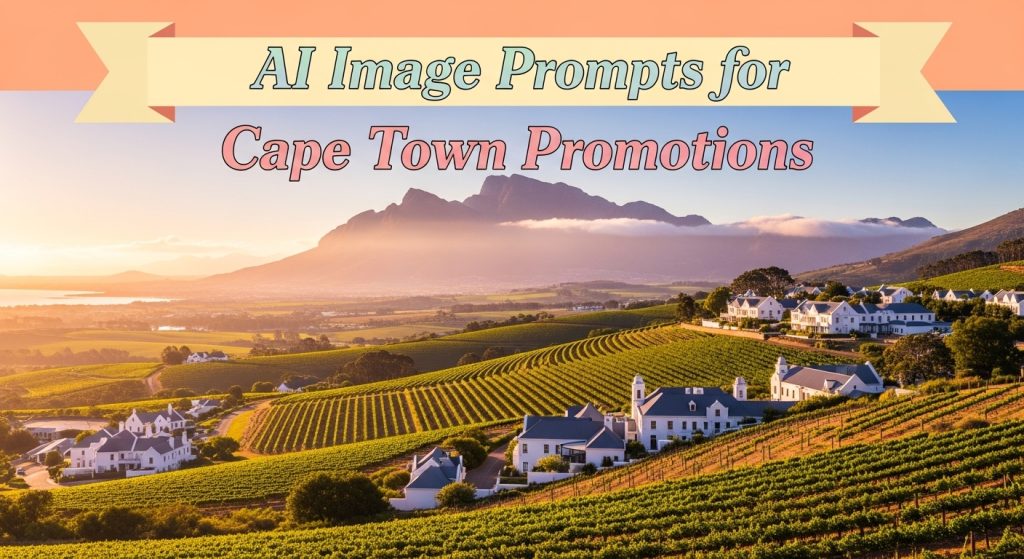
Stellenbosch’s picturesque vineyard settings require prompts that capture both the agricultural aspects and historic Dutch architecture. Effective prompts include: “Stellenbosch wine estate with Cape Dutch gabled white manor house, rolling vineyards extending to dramatic mountain backdrop, ancient oak trees lining driveway, golden late afternoon light, rows of green vines, wine tourism photography, ultra-detailed 8K landscape.” These detailed architectural and landscape references help AI tools generate authentic representations of the region’s distinctive character.
Franschhoek Culinary Experiences
Franschhoek’s reputation as South Africa’s culinary capital demands prompts that highlight gourmet experiences. Create sophisticated food and wine imagery with: “Elegant outdoor dining at Franschhoek wine estate, white linen tablecloths, fine wine glasses catching afternoon light, gourmet plated South African cuisine, mountain vineyard backdrop, selective focus on food, professional food photography lighting, high-end culinary experience.” These prompts generate aspirational lifestyle imagery that appeals to luxury travelers and culinary enthusiasts seeking memorable dining experiences.
Seasonal Variations for Year-Round Marketing
The Cape Winelands transform dramatically across seasons, offering distinct marketing opportunities throughout the year. For autumn harvest imagery, use: “Cape winelands autumn harvest scene, workers hand-picking ripe grapes, golden vineyards, early morning mist, soft directional light, mountains in background, authentic wine production, photojournalistic style.” For winter promotional materials, try: “Cozy Winelands winter scene, Cape Dutch manor house with mountains dusted in snow, stone fireplace with roaring fire inside elegant tasting room, red wine being poured, intimate warm lighting, luxury winter escape.”
Spring and summer imagery benefits from prompts emphasizing renewal and outdoor activities: “Spring in Cape Winelands, vibrant green vineyards, wildflowers blooming between rows, picnic setting under ancient oak tree, couple enjoying wine tasting with mountain backdrop, bright natural daylight, romantic atmosphere.” Seasonal specificity helps maintain fresh marketing content throughout the year while targeting visitors during different travel seasons.
Expert Tip: Winelands Color Palettes
For the most authentic Cape Winelands imagery, specify these regional color palettes in your prompts:
- Summer: Vibrant greens, azure blue skies, bright white Dutch architecture
- Autumn: Amber, burgundy, and gold vineyards against earthy brown soil
- Winter: Muted greens, granite gray mountains, warm interior amber lighting
- Spring: Bright yellow canola fields, pastel wildflowers, fresh green vines
Cultural Cape Town: Prompts That Capture Local Heritage
Cape Town’s rich cultural tapestry offers compelling visual narratives that distinguish it from other coastal destinations. AI prompts for cultural content require special attention to authenticity, historical accuracy, and respectful representation. The goal is creating images that showcase cultural heritage as a tourism asset while avoiding stereotypes or misrepresentation.
Effective cultural prompts balance architectural elements with human stories, traditional practices with contemporary contexts. Cape Town’s multicultural identity should be reflected through diverse representation and attention to specific cultural markers that make the city unique.
Bo-Kaap Neighborhood Color Palettes
Bo-Kaap’s distinctive colorful houses create instantly recognizable imagery that has become synonymous with Cape Town. For authentic representations, use highly specific color references: “Bo-Kaap cobblestone street with rows of brightly colored houses in authentic colors: cobalt blue, turmeric yellow, mint green, and coral pink, Cape Malay architectural details, Table Mountain visible in background, local residents in foreground, bright daylight, photorealistic street photography.” Including specific cultural elements enhances authenticity: “Traditional Cape Malay cooking scene in Bo-Kaap home, spices in small bowls, woman preparing traditional koesisters, colorful headscarves, bright home interior, warm afternoon light through windows, documentary photography style.”
Township Tourism Respectful Representation
Township tourism imagery requires exceptional sensitivity and respect for residents and their lived experiences. Focus prompts on positive community elements and cultural vibrancy: “Langa township arts center, local artists displaying colorful paintings, community members engaged in creative activities, bright natural lighting, authentic township architecture in background, positive community atmosphere, documentary photography style.” Or highlight entrepreneurship: “Khayelitsha craft market, female entrepreneurs selling handmade beadwork, colorful textiles displayed on stalls, customers examining crafts, vibrant community atmosphere, authentic township setting, photojournalistic style.”
Always avoid prompts that sensationalize poverty or present township communities one-dimensionally. Instead, craft prompts that showcase resilience, creativity, and cultural pride: “Township tour guide explaining local history to interested visitors, community heritage museum in background, engaged expressions, knowledge sharing, authentic cultural exchange, natural lighting, documentary photography style.”
Robben Island Historical Imagery
Robben Island’s profound historical significance requires prompts that convey its importance with appropriate gravity and historical accuracy. Structure prompts with specific architectural references: “Robben Island view from ferry approaching the harbor, historic limestone buildings visible, clear blue sky, turquoise water surrounding the island, former prison visible on hillside, historic site photography, educational tourism, photorealistic detail.” For more emotionally resonant imagery, focus on specific historical elements: “Former prison cell on Robben Island with sunlight streaming through barred window, simple furnishings, historical preservation site, educational tourism, documentary photography style.”
When depicting Robben Island, ensure prompts avoid sensationalism while still conveying the site’s historical importance. Include terms like “place of reflection,” “historical preservation,” and “educational tourism” to generate appropriate imagery suitable for respectful promotion of this UNESCO World Heritage site.
Local Terminology to Include
Incorporating local Cape Town terminology significantly enhances the authenticity of AI-generated images. Terms like “fynbos” instead of generic “shrubs” or “Table Mountain sandstone” rather than just “rocks” direct the AI to create more regionally accurate visuals. Including specific neighborhood names such as “Sea Point Promenade,” “Woodstock street art,” or “Bree Street café culture” helps generate images with authentic Cape Town character rather than generic urban scenes that could be anywhere in the world.
Local weather phenomena terminology also improves results dramatically. Reference the “Cape Doctor” when depicting the famous southeastern wind, specify “tablecloth cloud” for Table Mountain’s distinctive cloud formation, or mention “champagne air” when creating clear summer day scenes. These regional specifics signal to AI systems that you’re looking for Cape Town’s unique atmospheric conditions rather than generic weather patterns.
Lighting Specifications for Different Locations
Cape Town’s lighting conditions vary dramatically by location due to its unique geography between mountains and ocean. For Atlantic Seaboard locations, specify “golden afternoon backlight” to capture the magnificent sunsets that illuminate the coast. For City Bowl images, use “morning light on east-facing Table Mountain slopes” to generate accurate early day scenes. The V&A Waterfront benefits from “blue hour lighting with city lights reflecting in harbor waters” for evening promotional materials, while Kirstenbosch requires “dappled light through tree canopy” for authentic garden imagery.
Adding People and Scale to Tourism Images
Empty landscape shots rarely convert as effectively as scenes showing people enjoying experiences. Include specific demographic details in prompts like “diverse group of friends enjoying sunset drinks at Camps Bay beach bar” or “couple walking hand-in-hand along Kirstenbosch Boomslang walkway.” For adventure activities, add scale with prompts such as “paraglider launching from Lion’s Head, appearing tiny against massive mountain and sprawling city below” to create dramatic perspective. These human elements help potential visitors envision themselves in the destination and make emotional connections to the experiences depicted.
Styling Techniques for Brand Consistency
Maintain visual brand consistency by including specific styling parameters in every prompt. For luxury brands, include terms like “elegant composition, soft muted color palette, selective focus, premium atmosphere” across all generated images. Adventure tourism businesses should specify “dynamic angles, vibrant saturated colors, wide-angle dramatic perspective, action-focused composition” for cohesive branding. Specify a consistent time of day, weather condition, or color scheme across all promotional materials to create a recognizable visual identity.
Consider creating a prompt template with your brand’s visual identity parameters that can be applied to any Cape Town location. For example: “[Location] in Cape Town, South Africa, photographed with [your brand’s specific camera style], [your brand’s typical lighting conditions], featuring [your brand’s typical subjects/activities], [your brand’s color processing style], professional travel photography.” This templated approach ensures all AI-generated images maintain consistent brand identity regardless of which Cape Town location they showcase.
Legal and Ethical Considerations When Using AI Images
The rapidly evolving nature of AI image generation brings important legal and ethical considerations for Cape Town tourism marketers. Understanding these issues helps protect your business while ensuring responsible representation of Cape Town’s diverse communities and cultural heritage. The legal landscape regarding AI-generated imagery continues to develop, making it essential to stay informed about best practices.
While AI-generated images offer tremendous creative possibilities, they also raise questions about authenticity in destination marketing. Finding the balance between idealized representations and realistic expectations is crucial for maintaining traveler trust. Transparency about image creation methods helps build credibility with increasingly savvy consumers who may question the authenticity of too-perfect destination imagery.
Disclosure Requirements for Marketing Materials
While regulations specifically governing AI-generated imagery in tourism marketing are still developing, transparency best practices are emerging. Many destination marketing organizations have adopted voluntary disclosure policies, using subtle captions like “AI-enhanced visualization” or “Conceptual representation” for AI-generated promotional images. This transparency builds trust with travelers who increasingly question whether destinations will match their online representations. When images show idealized conditions or composite scenes not achievable in a single photograph, disclosure helps manage visitor expectations while still showcasing Cape Town’s potential.
Avoiding Cultural Misrepresentation
Cape Town’s complex cultural landscape requires careful attention when creating AI imagery that includes cultural elements or depicts specific communities. Review AI-generated images critically for unintentional stereotypes, historical inaccuracies, or cultural misrepresentations before using them in promotional materials. Consider consulting with cultural representatives when creating prompts for areas like Bo-Kaap, township communities, or indigenous cultural experiences to ensure respectful and accurate representation that benefits rather than exploits local communities.
Copyright Issues with AI-Generated Content
Copyright status of AI-generated imagery remains a complex legal area under development. Most AI image tools’ terms of service grant commercial usage rights to the users who create the images, but these rights vary between platforms. Midjourney’s commercial plan, for instance, provides full commercial rights, while some free tools restrict commercial applications. Before incorporating AI-generated Cape Town imagery into marketing campaigns, review the specific terms of the AI platform used and consider consulting with a legal professional about your intended usage, especially for large-scale advertising campaigns where potential liability issues could be significant.
Start Using AI to Promote Cape Town Today
Begin with free tools like Playground AI or Leonardo.AI to experiment with Cape Town-focused prompts without financial commitment. Start small by generating complementary images for social media posts, then gradually incorporate AI-generated visuals into your website and digital brochures as you develop your prompt engineering skills. Focus initially on landscapes and architectural features before attempting more complex scenes with human subjects or detailed cultural elements. Save successful prompts in a dedicated document to build a personal library of effective Cape Town-specific formulations you can modify for future marketing needs.
For more advanced Cape Town-specific AI image generation, CapeBiz Toolkit offers pre-tested prompt templates designed specifically for local businesses promoting the Mother City. Their specialized resources help you create authentic, conversion-optimized imagery that showcases Cape Town’s unique appeal while maintaining brand consistency across all your visual marketing materials.
Frequently Asked Questions About AI Image Prompts for Cape Town Promotions
Below are answers to common questions about using AI-generated imagery for Cape Town tourism promotion. These responses address the most frequent concerns businesses have when implementing AI visuals in their marketing strategies.
Can I use AI-generated images of Cape Town for commercial advertising?
Yes, you can use AI-generated images of Cape Town for commercial advertising, but the specific rights depend on which AI platform you use. Midjourney’s paid plans, DALL-E, and Leonardo.AI’s commercial plan all grant commercial usage rights for generated images. Always verify the specific terms of service for your chosen platform, as they regularly update their policies. For large advertising campaigns with significant budgets, consider obtaining written confirmation of commercial usage rights or consulting with a legal professional specializing in digital media rights.
How do I ensure my AI Cape Town images are culturally accurate?
Ensure cultural accuracy by researching specific terminology and cultural elements before creating prompts. Include authentic local references like specific architectural styles (Cape Dutch, Bo-Kaap Malay influence), indigenous plant species (fynbos, proteas), and accurate cultural practices. Avoid generic African stereotypes that don’t represent Cape Town’s specific cultural context. When depicting cultural communities or practices, consider having prompts and resulting images reviewed by individuals from those communities. Organizations like Cape Town Tourism can provide guidance on responsible representation of local cultures in promotional materials.
What’s the best AI tool for creating images of Cape Town beaches?
Midjourney currently produces the most realistic Cape Town beach scenes, particularly excelling at depicting the interaction between mountains and coastline that makes Cape Town’s beaches distinctive. Its strength in natural lighting effects captures the unique quality of Cape Town’s coastal light, especially during golden hour. DALL-E 3 performs well for beach scenes including human subjects and activities, making it ideal for lifestyle-focused beach promotions. For businesses on limited budgets, Leonardo.AI offers a good balance of quality and affordability with reasonable results for standard beach scenes, though it may struggle with Cape Town’s more complex coastal geographical features.
When creating beach scenes with any AI tool, include specific Cape Town beach names and their distinctive features for more accurate results: “Clifton’s granite boulders,” “Muizenberg’s colorful beach huts,” or “Blouberg’s view of Table Mountain across the bay.”
Do I need to disclose that my marketing materials use AI-generated images?
While not legally required in most jurisdictions yet, transparency about AI-generated imagery is becoming standard practice in responsible tourism marketing. Consider using subtle disclosures like “visualization” or “conceptual imagery” in captions or image credits. This transparency helps manage visitor expectations and builds trust with increasingly AI-aware consumers. The Cape Town Tourism Board recommends disclosure particularly for idealized images showing perfect conditions or composite scenes that combine elements not typically visible together, such as perfect weather with specific activities that might be seasonal.
How can I make my AI Cape Town images stand out from competitors?
Create distinctive Cape Town imagery by focusing on unique perspectives and specific local knowledge rather than generic tourist views. Include lesser-known but photogenic locations like Kloof Corner, Wally’s Cave on Lion’s Head, or the colorful fishing harbor at Kalk Bay. Specify unique lighting conditions like “after rain clarity with wet streets reflecting city lights” or “first light touching the Twelve Apostles mountains.” Incorporate seasonal specifics such as “August wildflowers on Signal Hill” or “December jacaranda-lined Constantia wine estate driveway.” These specific, knowledge-based details create images that showcase insider perspectives of Cape Town rather than the same standard postcard views used by competitors.
Another effective differentiation strategy is creating narrative sequences showing progressive stages of experiences rather than single static images. For example, generate a series showing “morning coffee at Truth Coffee Steampunk café, followed by walking through Company Gardens, ascending Table Mountain cable car, and sunset toast at cable station viewpoint.” These experience sequences create more emotionally engaging marketing materials than standalone landmark shots.
Alwaays remember that the most effective AI-generated Cape Town images combine technical excellence with authentic local knowledge and cultural sensitivity. As you develop your prompt engineering skills, you’ll create increasingly sophisticated visuals that showcase Cape Town’s magnificent diversity while driving genuine interest in experiencing the Mother City firsthand.
By implementing these techniques for AI image prompts for Cape Town promotions, you’ll create compelling visual content that captures the essence of the Cape Metropole while distinguishing your tourism business from competitors still using generic stock photography. Start with simple location prompts, then progressively refine your technique to create increasingly sophisticated marketing imagery that drives real business results.
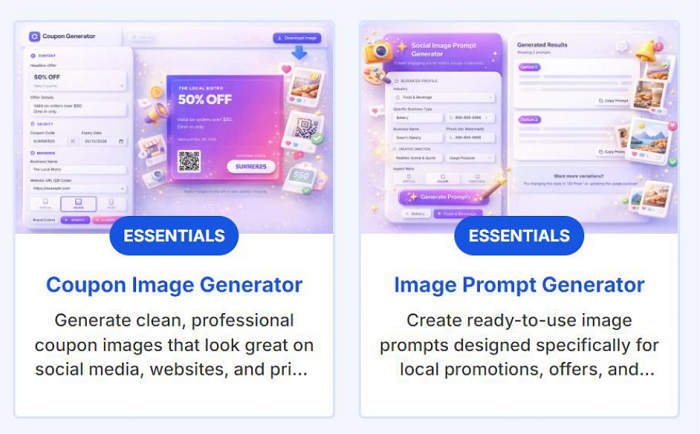
Want to attract new customers and reward your loyal ones with irresistible offers? The Free Image Prompt Generator at CapeBiz Toolkit helps you create stunning, professional coupons in just a few clicks. Start designing your free images and coupons now and give your sales an instant boost!